
Live oversight & remote visibility
Live monitoring and remote site surveillance for construction sites and every active property.
Construction site monitoring and trained operator oversight for staffed, unattended, distributed, temporary, and high-risk properties that need dependable remote visibility.
Designed around the property
Complete scope. Clear handoff. Long-term support.
Live monitoring and remote site surveillance connect supported alarm signals, priority camera events, access activity, recording, remote connectivity, system-health awareness, and critical alerts into one managed visibility and response service. For active construction sites, vacant projects, material yards, and temporary locations, coverage can be designed around changing perimeters, equipment, materials, access points, and after-hours activity. We define monitoring hours, event priorities, contacts, verification requirements, notifications, dispatch instructions, remote-access workflows, and reporting around actual site operations.
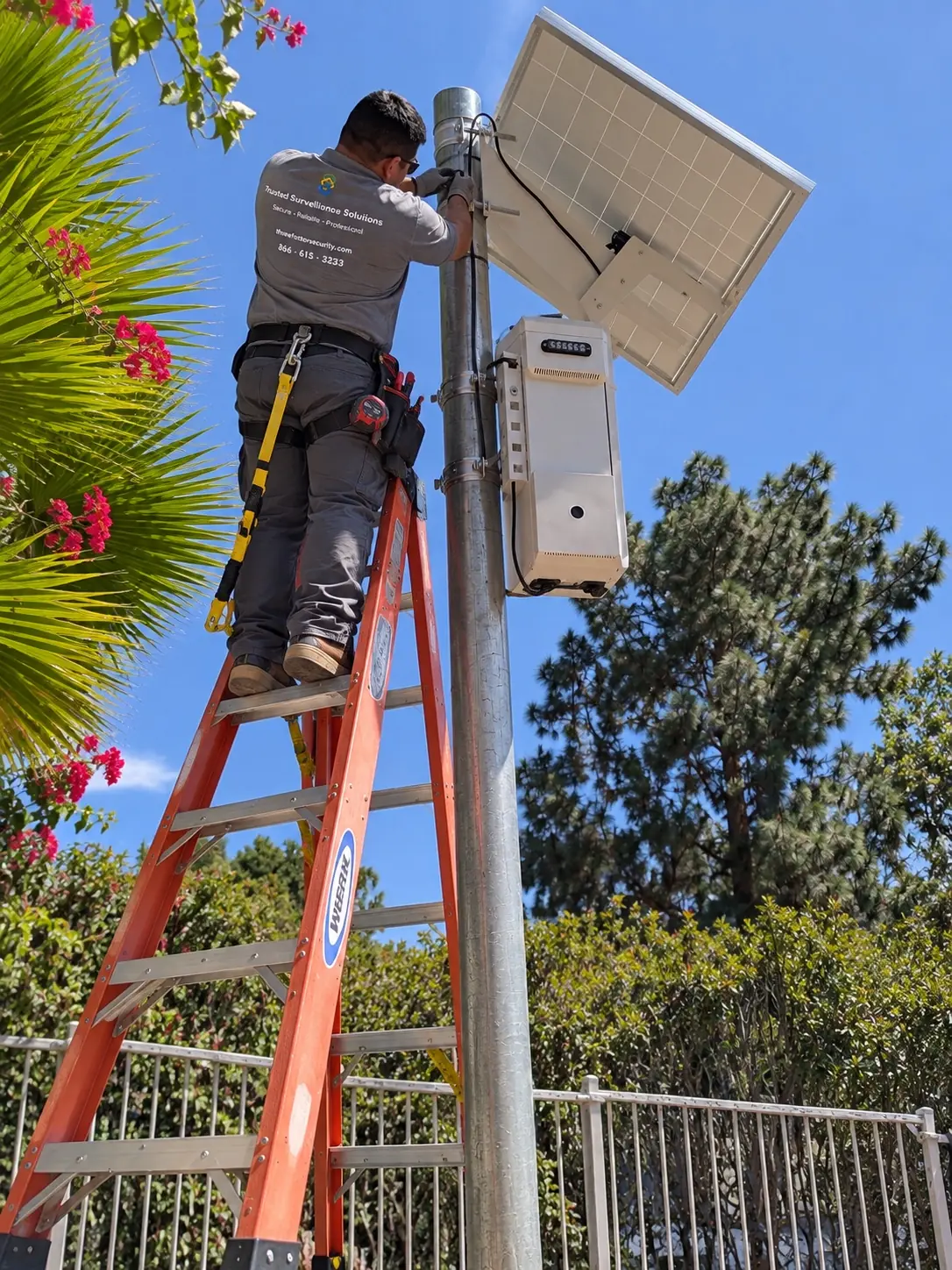
Live monitoring & remote surveillance
Solar-powered monitoring for temporary and remote sites.
Solar power and battery backup can support construction-site monitoring where permanent power is limited. We plan the equipment, available sunlight, power demand, connectivity, and monitoring schedule around the site.
Solar-powered field equipmentBattery backupSite-specific monitoring plans
Capabilities
Everything the system needs to work as one.
Scheduled, after-hours, or 24/7 operator monitoring options
Live review of supported alarm signals, analytics, and priority video events
Secure multi-site viewing with network, wireless, or cellular connectivity options
Property-specific verification, notifications, escalation paths, and dispatch coordination
Equipment-health awareness, event documentation, activity reports, and service review
What to expect
A structured path from assessment to handoff.
Operations & site assessment
Document the property, assets, staffing, operating hours, priority events, camera coverage, alarm zones, communications, power, connectivity, and response goals.
Coverage & system readiness
Coordinate supported cameras, recording, remote access, analytics, alarm connections, network or cellular communications, equipment protection, and operator visibility.
Monitoring & response protocol
Define coverage schedules, verification rules, notification order, dispatch instructions, exceptions, user access, health alerts, and reporting requirements.
Live testing & activation
Test remote coverage, recordings, connectivity, operator access, alarms, representative events, communications, escalation, and reporting before activation.
Related specialties
Construction site monitoringLive alarm & video monitoringRemote property surveillanceAfter-hours & 24/7 optionsMulti-site remote visibilityCellular connectivity optionsEvent verification & dispatchSystem health & activity reporting
Proof & deeper planning
Continue from this service into real work and focused solutions.
Project briefs document visible field delivery. Specialty solution pages explain how this service coordinates with other systems and operating requirements.
Project brief
Rapid-deployment surveillance coordinated with Valcor Group private security.
View projectProject brief
Discreet video coverage for guest-facing and operational hotel areas.
View projectSpecialty solution
Construction site security monitoring designed around a changing jobsite.
Explore solutionSpecialty solution
Mobile surveillance trailers planned as a complete field-security operation.
Explore solutionRelated evidence & planning
Service-specific planning tools
Prepare the next decision with a practical resource.
Common questions
Clear answers before the project begins.
These answers explain practical planning considerations for this service. Final recommendations are based on a professional assessment, the existing infrastructure, the property’s operating needs, and the systems selected.
How is live video monitoring different from recording?
Recording preserves video for later review. Professional live monitoring adds review of enrolled events and agreed actions such as verification, authorized talk-down, notifications, or dispatch coordination. Available actions and service hours depend on the selected platform and written monitoring agreement.
Who provides professional monitoring?
Professional monitoring is supplied by independent monitoring providers. Three Factor Security installs and configures supported technology and coordinates the agreed service scope. Self-monitored options instead depend on the customer receiving and acting on alerts.
What does a temporary site need for remote monitoring?
A temporary site needs suitable camera views, supported detection, recording where required, reliable communications, and sufficient power. Solar and battery options must be sized around equipment demand and site conditions. As construction changes, views, connections, and the approved monitoring scope should be reviewed.
What should be checked before monitoring is activated?
Confirm enrolled events, service hours, authorized contacts, permitted actions, and provider responsibilities. Test the supported event and communication path, image quality, notifications, and relevant backup arrangements. A functioning local recorder does not alone confirm that a remote provider is receiving events.
Southern California service areas
Live Monitoring & Remote Site Surveillance in Los Angeles →Live Monitoring & Remote Site Surveillance in Beverly Hills →Live Monitoring & Remote Site Surveillance in Santa Monica →Live Monitoring & Remote Site Surveillance in Irvine →Live Monitoring & Remote Site Surveillance in Newport Beach →Live Monitoring & Remote Site Surveillance in Ventura →View every service area →
Complete security offering
Coordinate this service with every layer of protection.
Explore the other systems and services Three Factor Security can design, install, monitor, and support around the same property.
Security Camera Systems
Professionally designed camera systems for dependable coverage, useful evidence, intelligent alerts, and secure viewing from anywhere.
Explore serviceVirtual Security Guard & Incident Response
Commercial and residential virtual security guard service with live remote patrols, event verification, authorized audio talk-down, and coordinated response while incidents are developing.
Explore serviceAlarm Systems
Layered intrusion detection with clear controls, verification options, dependable communications, and monitoring-ready operation.
Explore serviceIntercom Systems
Audio and video intercom systems that help teams identify visitors, communicate clearly, and release doors or gates with confidence.
Explore serviceAccess Control Systems
Secure, manageable access control for doors, gates, garages, elevators, and shared spaces—installed around daily operations.
Explore serviceEarly Detection Systems
AI analytics, perimeter technology, thermal sensing, and intelligent alerts designed to identify developing threats before they become damaging incidents.
Explore serviceGates, Fencing & Perimeter Security
Professionally designed pedestrian gates, vehicle gates, perimeter gates, and fencing—with gate operators, LPR-based vehicle entry, access control, and intercom release integrated around the property.
Explore serviceSecurity Audio & Emergency Communication Systems
Purpose-built speakers, paging, talk-down, duress, and security communication systems that help teams warn, direct, deter, and respond in real time.
Explore serviceSecurity System Upgrades & Modernization
Carefully planned upgrades for aging, unreliable, unsupported, or poorly documented camera, alarm, access-control, intercom, recording, and monitoring systems.
Explore serviceConsulting & System Design
Property-specific consulting, system audits, design documentation, budgeting, and phased security roadmaps built around real operating needs.
Explore servicePreventive Maintenance & System Health
Scheduled inspections, system-health reviews, cleaning, testing, updates, and documented recommendations for dependable long-term performance.
Explore serviceProject support
Clear terms. Dependable follow-through.
Coverage, service terms, and handoff requirements are documented for each project. Preventive maintenance, diagnostics, upgrades, and expansion options remain available as the property evolves.
Review our service commitment →Monitoring responsibilities
Professional monitoring is provided through independent monitoring providers. Three Factor Security installs and configures the supported technology and coordinates the agreed service scope. Enrolled events, service hours, verification, talk-down, notifications and dispatch coordination depend on the selected platform and written monitoring agreement. Self-monitored options rely on the customer receiving and acting on alerts.
Understand monitoring and response responsibilitiesBegin with a professional assessment