
Homes, estates, HOAs & gated communities
Estate and community perimeter protection designed in coordinated layers.
A private property or community boundary should provide useful awareness before activity reaches the residence, common area, controlled entrance, or protected asset.
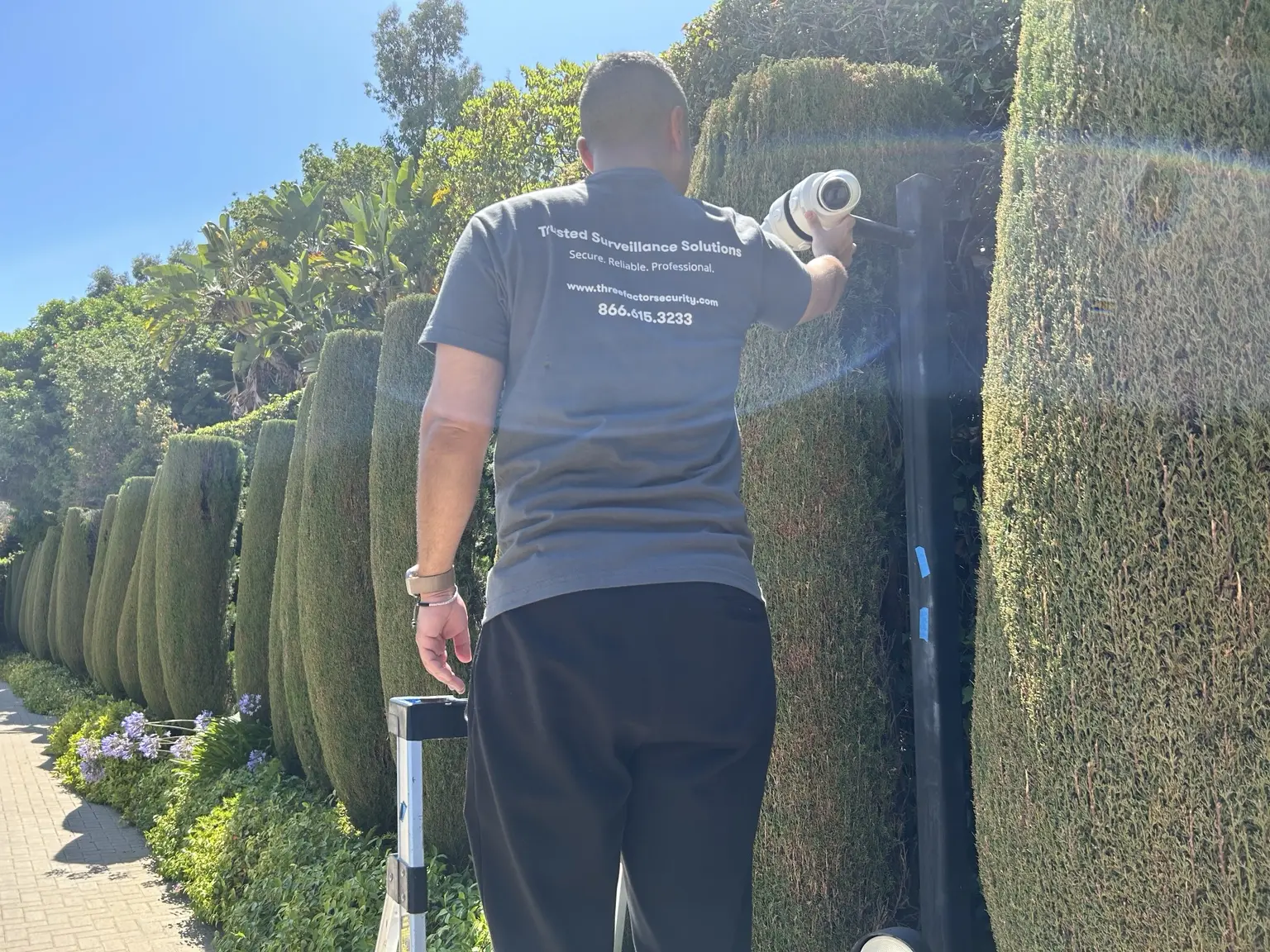 Fieldwork inBeverly Hills
Complete planning context
More than a single device or feature.
Three Factor Security reviews the complete property boundary, approaches, gates, driveways, terrain, landscaping, lighting, power, network, privacy expectations, normal users, visitors, deliveries, and response responsibilities. A final design may combine purpose-selected cameras with fence sensors, infrared beams, LiDAR, radar, thermal detection, LPR, intercoms, access control, audio, lighting, alarms, and monitoring where appropriate.
What should be evaluated
Decisions that shape a dependable scope.
The final design depends on verified property conditions, selected systems, supported integrations, operating workflows, and the signed project scope.
Residents, guests, staff, vendors, deliveries, vehicles, and normal activity patterns
Sensor selection for terrain, landscaping, weather, animals, lighting, and privacy
Verification cameras, gate entry, intercom, access control, audio, and lighting
Monitoring hours, authorized contacts, escalation, private-security coordination, and documentation
Planning process
A structured path from need to verified operation.
Walk the complete perimeter
Review the property boundary, approaches, terrain, gates, pedestrian routes, structures, utilities, existing systems, and the activity that should be treated as normal.
Select each detection layer
Coordinate appropriate cameras, beams, fence sensors, LiDAR, radar, thermal, LPR, lighting, audio, alarms, and physical perimeter improvements around the actual environment.
Connect entry and verification
Align gates, intercoms, access credentials, vehicle identification, contextual video, schedules, permissions, and approved release procedures.
Define response and ownership
Document monitored events, service hours, authorized users, verification, notifications, intervention, field response, incident records, maintenance, and future review.
Coordinated capabilities
Fence sensors, infrared beams, LiDAR, radar, and thermal detectionPerimeter, approach, driveway, gate, and context camerasVehicle gates, LPR, intercoms, and access controlSupported audio talk-down, lighting, alarms, and alertsMonitoring and licensed private-security coordinationPrivacy, permissions, retention, documentation, and maintenance planning
Common planning questions
Clear expectations before design begins.
Guidance is prepared and reviewed by Three Factor Security’s named Security Solutions Manager and Security Solutions Engineers. Product compatibility, performance, retention, code, privacy, monitoring, access, and response requirements remain project-specific.
Is an infrared beam the right detector for every property?
No. Beams can be useful in appropriate controlled paths, but landscaping, animals, terrain, weather, access patterns, distance, and nuisance activity may favor fence sensors, camera analytics, LiDAR, radar, thermal detection, or a coordinated combination.
Can the system alert before someone reaches the residence or building?
Where the property conditions and selected technology support it, perimeter and approach detection can bring activity to attention before it reaches a protected structure. Coverage, verification, response, and performance expectations must be established through field assessment.
Can residents, board members, managers, and security personnel have different access?
Yes, on supported platforms. Named accounts and role-based permissions can separate administrative control, selected camera views, gate or door actions, event review, exports, and daily-use functions.
Does the system include patrol or armed response?
Not automatically. Monitoring, private-security, patrol, field verification, and dispatch responsibilities are included only when separately available, authorized, properly licensed, and documented in the applicable written agreements.
Begin with a professional assessment