Uncoordinated devices
Systems are evaluated together so coverage, entry, detection, communications, and response support one operating plan.

The Three Factor delivery standard
Professional security is more than equipment. It is the coordination of property conditions, infrastructure, technology, people, and response through every stage of the system lifecycle.
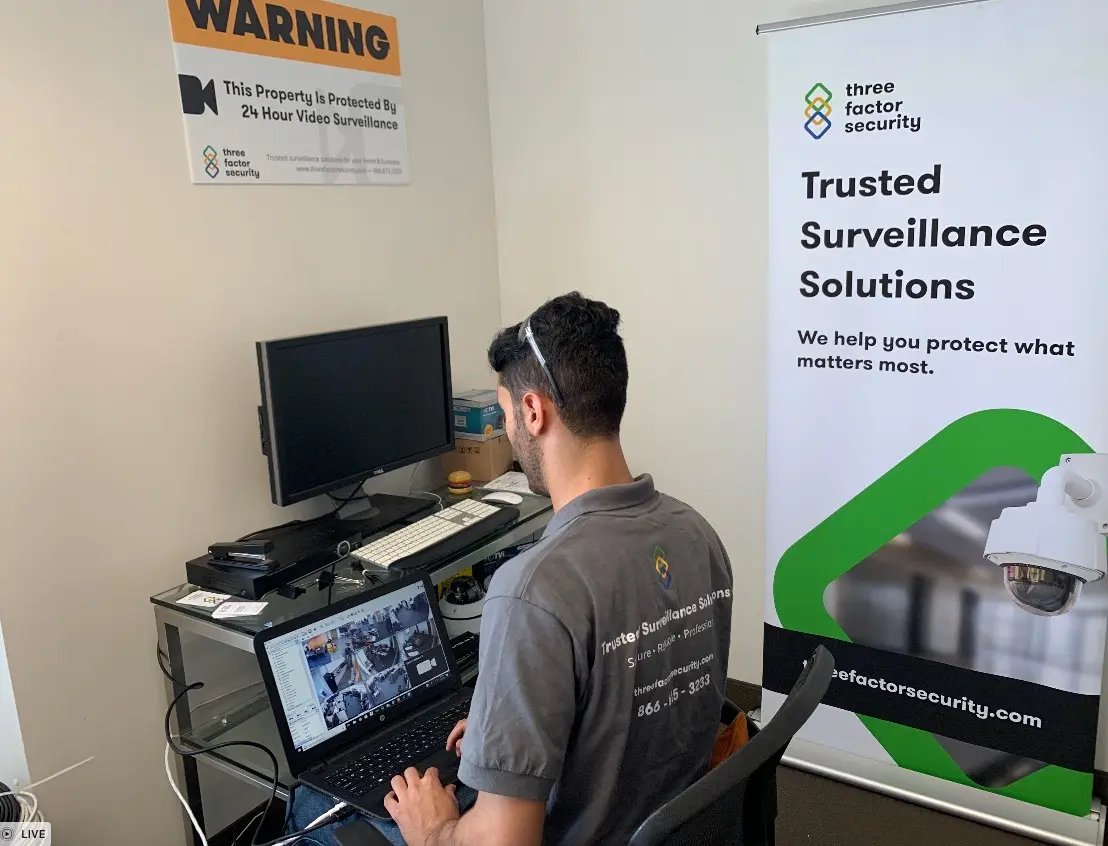 Fieldwork inDowntown Los Angeles
Complete delivery lifecycle
The exact scope varies by property. This framework keeps design decisions, field work, system operation, and post-installation support connected instead of treating them as separate transactions.
We clarify the property, operating priorities, current concerns, stakeholders, schedules, and the decisions the project needs to support.
Coverage, controlled openings, detection, response, storage, network, power, pathways, and future expansion are planned as one system.
Responsibilities, site access, infrastructure, other trades, phasing, safety, and operating constraints are aligned before field work begins.
Devices, wiring, controls, enclosures, racks, mounts, gates, speakers, upgraded system components, and supporting infrastructure are installed with careful finish work.
Supported functions, recording, alerts, permissions, integrations, remote access, failover, and response workflows are tested together.
Approved users receive practical training and the project is handed off with the applicable system information, contacts, and operating guidance.
Selected monitoring, diagnostics, preventive maintenance, upgrades, and expansion help the system remain useful as the property changes.
Continuity by design
A dependable handoff should preserve the decisions behind the installation. Project-specific documentation is defined by the signed scope and may include the records needed to operate, support, and responsibly expand the system.
Review our standards & accountabilityA professional handoff
Clear planning and commissioning reduce the gaps that commonly appear between products, trades, users, and response procedures.
Systems are evaluated together so coverage, entry, detection, communications, and response support one operating plan.
Network, power, storage, pathways, mounting, remote connectivity, and equipment spaces are considered before installation.
Administrators, users, contacts, escalation paths, and project responsibilities are defined for the people who will operate the system.
Capacity, lifecycle priorities, documentation, preventive maintenance, and expansion are considered beyond the initial installation.
Begin with a professional assessment