
Visitor communication & entry
Intercom systems for clear communication and controlled entry.
An intercom lets an authorized person communicate with a visitor and, where configured, release a door or gate. Three Factor Security coordinates audio or video stations, call routing, access-control interfaces, network connections, and entry hardware for commercial buildings, communities, and residences.
Designed around the property
Complete scope. Clear handoff. Long-term support.
We design intercom systems around the way visitors, vendors, deliveries, residents, customers, and staff actually arrive. Door stations, gate call boxes, tenant directories, indoor stations, mobile answering, approved entry release, cameras, access-control integrations, and event records are planned as one dependable communication workflow.
Visitor communication & entry
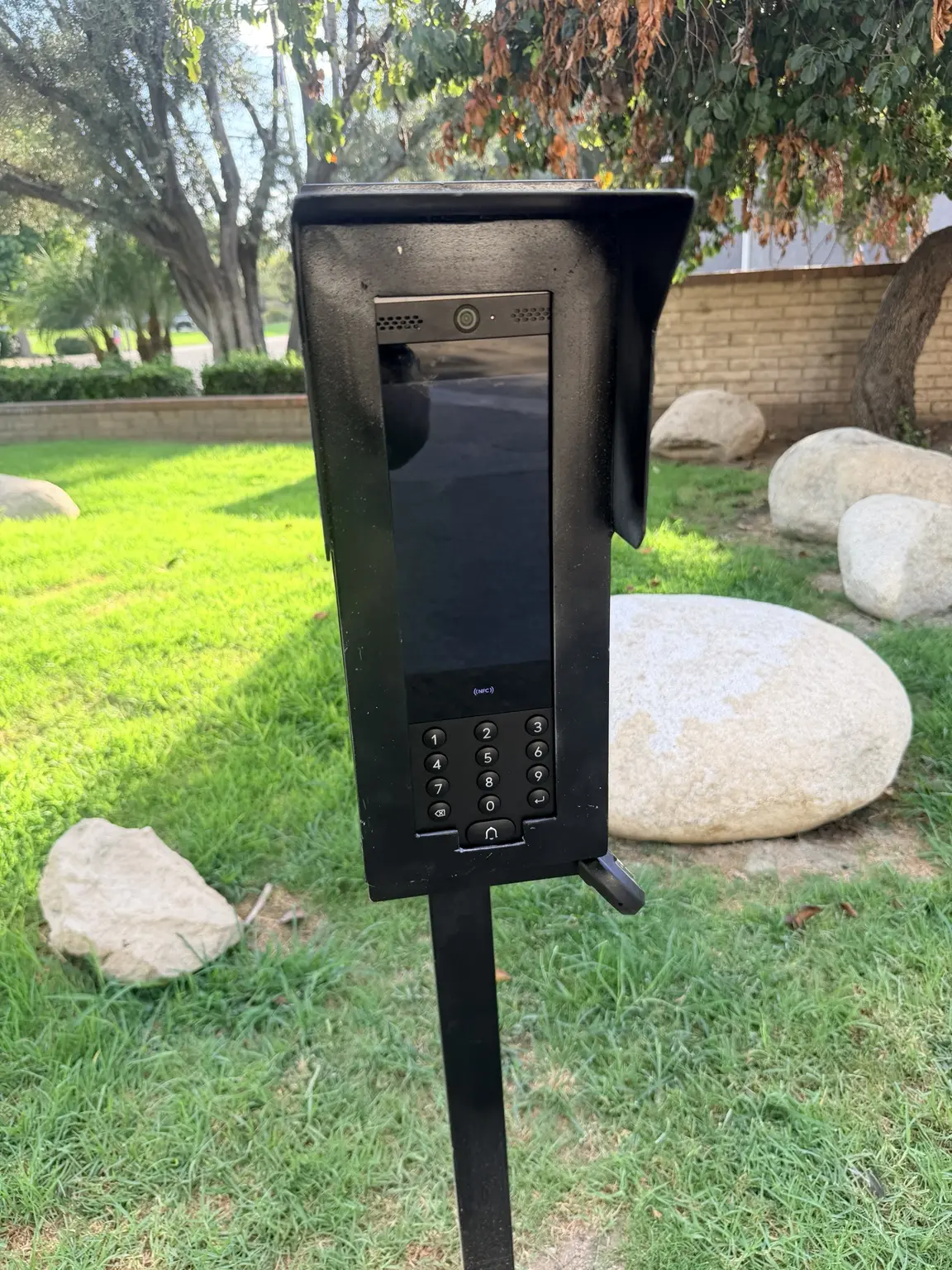
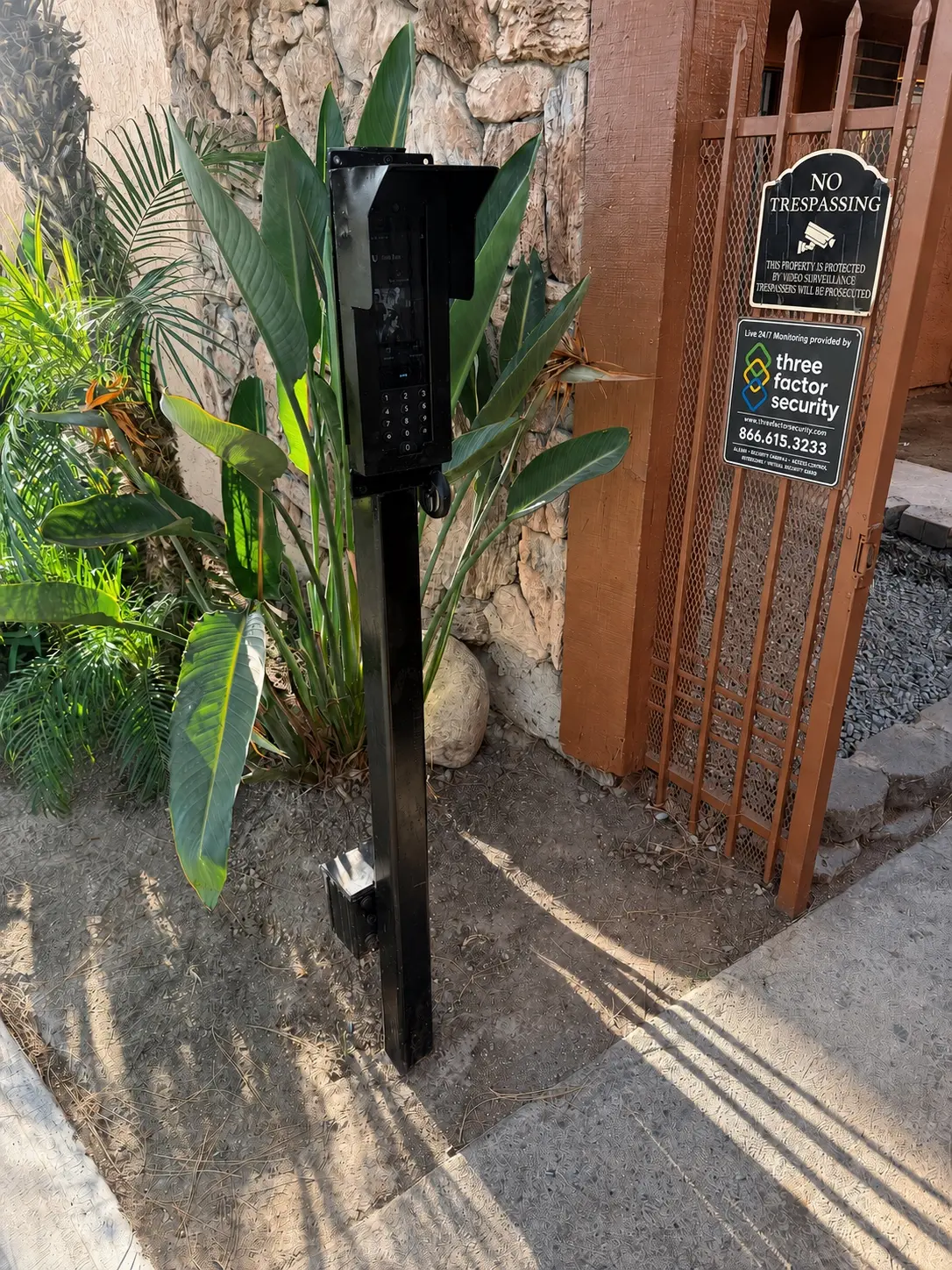
Prominent intercom stations for vehicle and pedestrian gates.
We position video intercoms where drivers and pedestrians can identify the call point, communicate clearly, and use approved entry credentials without interfering with safe gate operation.
Vehicle-gate visitor verificationPedestrian-gate communicationKeypad, credential and remote release
Capabilities
Everything the system needs to work as one.
Lobby, gate, garage, loading, and perimeter call points
Mobile, desktop, desk-station, and telephone answering
Multi-tenant directories and resident or department routing
Remote door and gate release with event history and defined authorization
Visitor, vendor, contractor, and delivery workflows integrated with access control and cameras
What to expect
A structured path from assessment to handoff.
Visitor-flow assessment
Document entrances, call points, answering locations, visitor types, delivery workflows, and release requirements.
Communication design
Select stations, cameras, displays, mobile users, directories, network, power, and integration points.
Professional installation
Install door stations, call boxes, indoor stations, interfaces, wiring, and protective hardware.
Testing & training
Verify audio, video, calling, routing, authorized release, event records, mobile access, and after-hours procedures with the people who will use them.
Related specialties
Video intercomsAudio intercomsGate call boxesMulti-tenant directoriesMobile answeringRemote entry releaseVisitor managementAccess-control integration
Visitor, vendor & delivery entry
Make every remote release part of a defined arrival workflow.
A door or gate release should connect the caller, the person making the decision, the opening being controlled, the available video, and the event record. We map that complete workflow before selecting the stations or applications.
Arrival categories
Separate visitors, vendors, contractors, deliveries, residents, employees, and after-hours callers so each follows the appropriate verification and entry path.
Answering responsibility
Define who answers during business hours, after hours, and during staff absences across mobile, desktop, desk-station, or telephone endpoints.
Video & identity context
Coordinate the call view with useful entry, vehicle, package, or surrounding context without collecting more information than the property needs.
Release authority
Limit door, gate, garage, elevator, and common-area release to named roles, approved schedules, and the openings each person is authorized to control.
Temporary access
Use supported scheduled, mobile, card, fob, keypad, QR, or other temporary credentials when repeat visitors should not require a live release every time.
Events & exceptions
Review supported calls, release events, denied access, missed calls, connectivity issues, and after-hours exceptions under the property’s retention and privacy rules.
Available identity checks, credentials, event records, remote release, local operation, and integrations depend on the selected intercom, access-control, gate, network, and management platforms. Final authority and procedures remain property-specific.
Proof & deeper planning
Continue from this service into real work and focused solutions.
Project briefs document visible field delivery. Specialty solution pages explain how this service coordinates with other systems and operating requirements.
Related evidence & planning
Service-specific planning tools
Prepare the next decision with a practical resource.
Common questions
Clear answers before the project begins.
Guidance is prepared and reviewed by Three Factor Security’s named Security Solutions Manager and Security Solutions Engineers. Final recommendations are based on a professional assessment, the existing infrastructure, the property’s operating needs, and the systems selected.
What is the difference between an analog intercom and an IP video intercom?
Traditional analog intercoms use dedicated wiring and are usually limited to local audio or basic video stations. IP intercoms use the data network to support higher-quality video and audio, multiple answering devices, event history, remote administration, and integration with supported door, gate, camera, or access-control systems.
Can I see a visitor and unlock the door when I am off-site?
Yes, when the selected intercom, access-control hardware, network, and permissions support remote answering and release. Authorized users can review the visitor, speak with them, and release the correct opening from an approved mobile or desktop interface.
Can the intercom integrate with access control and security cameras?
Yes. A coordinated design can connect the visitor call, live video, door status, credential event, and release action so staff do not have to switch among unrelated systems. The exact workflow depends on platform compatibility and the door or gate hardware.
Does an IP intercom work if the internet goes down?
Local calling and door-release functions may continue when the local network, controller, power, and required on-site services remain operational. Off-site answering and cloud-dependent features generally require internet connectivity. Critical entries can be reviewed for backup power and connectivity options.
Can intercom calls ring multiple staff members or follow a schedule?
Supported platforms can route calls to multiple authorized recipients, groups, or stations and can apply business-hours or after-hours rules. We configure routing around the actual coverage plan so one missed desk phone does not become the only way a visitor is handled.
Can visitors receive temporary PINs or QR credentials?
Yes, on compatible intercom and access-control platforms. Temporary PINs, mobile credentials, or scheduled QR credentials can be limited to approved doors and time windows. Available credential types depend on the reader, controller, software version, and visitor-management workflow selected for the property.
Southern California service areas
Complete security offering
Coordinate this service with every layer of protection.
Explore the other systems and services Three Factor Security can design, install, monitor, and support around the same property.
Security Camera Systems
Professionally designed camera systems for dependable coverage, useful evidence, intelligent alerts, and secure viewing from anywhere.
Explore serviceLive Monitoring & Remote Site Surveillance
Construction site monitoring and trained operator oversight for staffed, unattended, distributed, temporary, and high-risk properties that need dependable remote visibility.
Explore serviceVirtual Security Guard & Incident Response
Commercial and residential virtual security guard service with live remote patrols, event verification, authorized audio talk-down, and coordinated response while incidents are developing.
Explore serviceAlarm Systems
Layered intrusion detection with clear controls, verification options, dependable communications, and monitoring-ready operation.
Explore serviceAccess Control Systems
Secure, manageable access control for doors, gates, garages, elevators, and shared spaces—installed around daily operations.
Explore serviceEarly Detection Systems
AI analytics, perimeter technology, thermal sensing, and intelligent alerts designed to identify developing threats before they become damaging incidents.
Explore serviceGates, Fencing & Perimeter Security
Professionally designed pedestrian gates, vehicle gates, perimeter gates, and fencing—with gate operators, LPR-based vehicle entry, access control, and intercom release integrated around the property.
Explore serviceSecurity Audio & Emergency Communication Systems
Purpose-built speakers, paging, talk-down, duress, and security communication systems that help teams warn, direct, deter, and respond in real time.
Explore serviceSecurity System Upgrades & Modernization
Carefully planned upgrades for aging, unreliable, unsupported, or poorly documented camera, alarm, access-control, intercom, recording, and monitoring systems.
Explore serviceConsulting & System Design
Property-specific consulting, system audits, design documentation, budgeting, and phased security roadmaps built around real operating needs.
Explore servicePreventive Maintenance & System Health
Scheduled inspections, system-health reviews, cleaning, testing, updates, and documented recommendations for dependable long-term performance.
Explore serviceProject support
Clear terms. Dependable follow-through.
Coverage, service terms, and handoff requirements are documented for each project. Preventive maintenance, diagnostics, upgrades, and expansion options remain available as the property evolves.
Review our service commitment →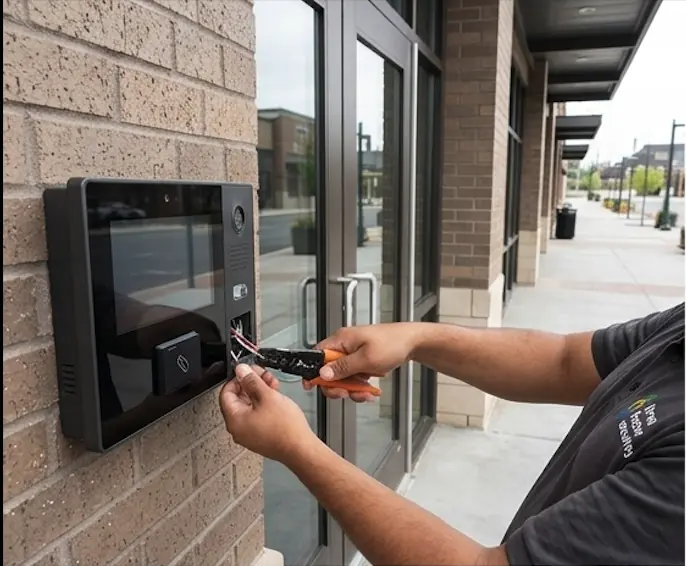
Doors, gates & access coordination
The opening, hardware, power, network, credential, and release method must work as one.
Access projects often cross several responsibilities. We define the security-system scope and coordinate supported readers, intercoms, locks, operators, request-to-exit devices, contacts, fire/life-safety interfaces, network, power, schedules, and user administration with the responsible property team and trades.
- Opening and hardware condition
- Normal entry, visitor, delivery, and after-hours workflows
- Fail-safe, fail-secure, emergency release, and code requirements
- Gate safety devices, vehicle loops, intercom, and remote release
- Credential ownership, permissions, event history, and offboarding
- Testing, training, documentation, and service responsibility
Begin with a professional assessment