
Visitors, vendors & controlled entry
Visitor entry and credential management built around the complete arrival workflow.
Visitor entry works best when identification, communication, authorization, release, credentials, video context, and audit history operate as one deliberate process.
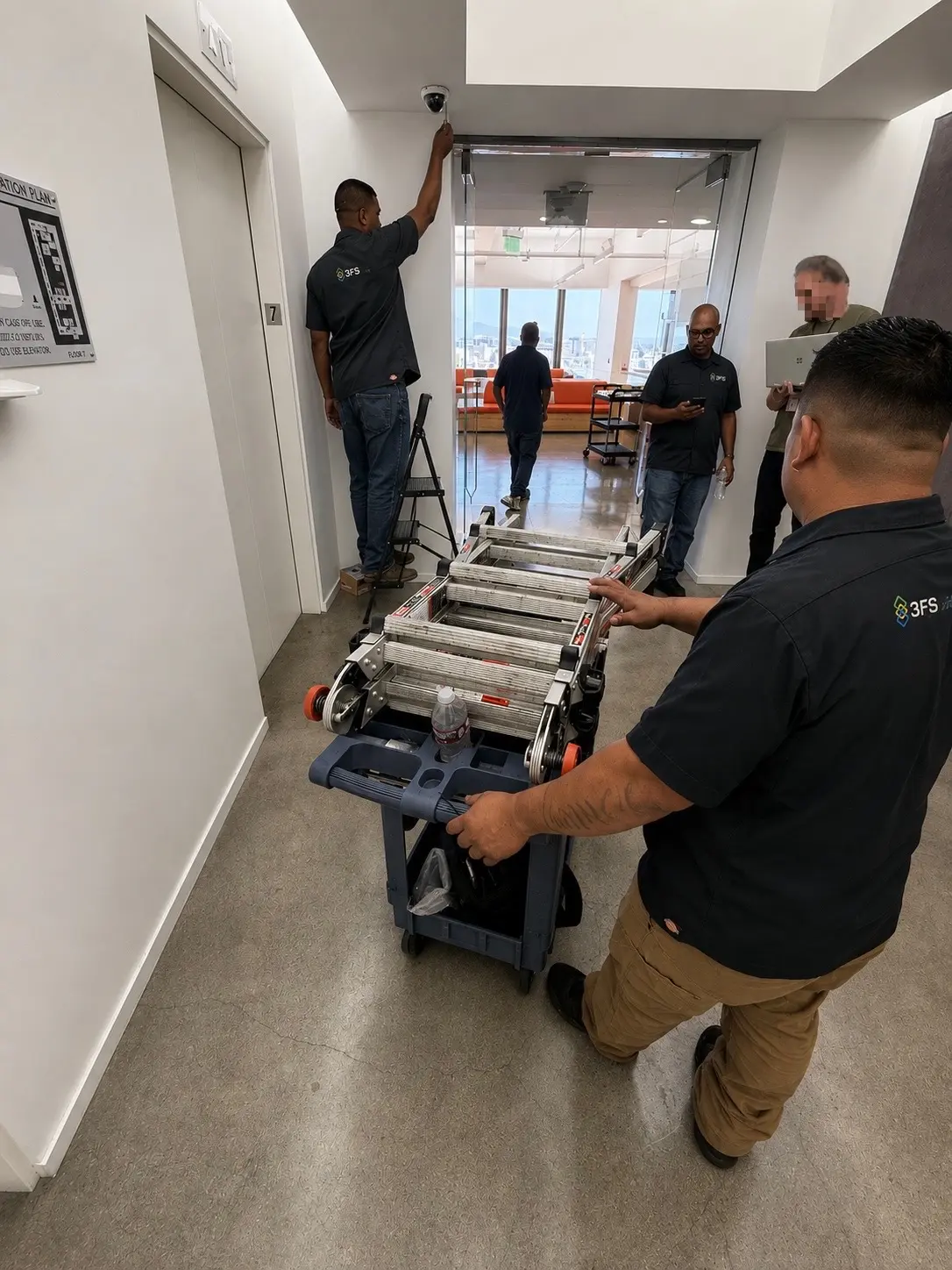 Fieldwork inSan Juan Capistrano
Complete planning context
More than a single device or feature.
Three Factor Security maps how employees, visitors, residents, contractors, deliveries, and service vendors arrive and who is authorized to make each entry decision. A final scope can coordinate supported video intercoms, access-control readers, mobile or desk answering, temporary credentials, door and gate hardware, contextual cameras, schedules, permissions, event history, and the local procedures that remain available during connectivity interruptions.
What should be evaluated
Decisions that shape a dependable scope.
The final design depends on verified property conditions, selected systems, supported integrations, operating workflows, and the signed project scope.
Door, gate, elevator, garage, and common-area hardware and life-safety requirements
Temporary, scheduled, mobile, card, fob, keypad, or QR credentials where supported
Video context, event history, user roles, offboarding, and privacy expectations
Local operation, remote access, network resilience, and documented exception procedures
Planning process
A structured path from need to verified operation.
Map every arrival path
Document visitor types, entrances, call points, answering locations, delivery workflows, restricted areas, and release authority.
Coordinate entry technology
Plan compatible intercom, access control, credentials, cameras, door or gate hardware, network, power, and management roles.
Configure permissions
Establish user roles, schedules, temporary access, notification paths, event history, and approved remote-release procedures.
Test real workflows
Verify representative visitor calls, credentials, door or gate release, denied access, event records, local operation, and staff handoff.
Coordinated capabilities
IP video intercom and call-point planningDoor, gate, garage, and elevator access controlTemporary and scheduled credentials where supportedMobile, desktop, or staffed-station answeringContextual video and entry event historyPermission, offboarding, and exception workflows
Common planning questions
Clear expectations before design begins.
Guidance is prepared and reviewed by Three Factor Security’s named Security Solutions Manager and Security Solutions Engineers. Product compatibility, performance, retention, code, privacy, monitoring, access, and response requirements remain project-specific.
Can staff answer a visitor from a phone or computer?
Supported IP intercom platforms can route calls to approved mobile, desktop, or staffed stations. Exact routing, remote access, licensing, local operation, and fallback behavior depend on the selected platform and network design.
Can a visitor receive temporary access?
Supported access-control platforms may issue time-limited mobile, card, keypad, PIN, or QR credentials. Credential type, duration, permissions, identity verification, recordkeeping, and revocation should match the property’s policy.
Will visitor entry continue if the internet is unavailable?
Appropriately designed systems can preserve supported local functions on the property network, while off-site answering and remote management generally require connectivity. The local operating mode and backup strategy must be confirmed during design.
Can cameras be linked to entry events?
Compatible platforms can associate video context with visitor calls, door activity, credential events, or alarms. Final integration depends on current platform support, permissions, licensing, storage, and privacy requirements.
Begin with a professional assessment