Use this checklist to compare written security proposals on the complete operating outcome—not camera count or initial price alone. Ask every bidder to identify what is included, excluded, assumed, recurring, customer-owned, or dependent on another provider.
Know what the customer controls and what creates long-term dependency.
Customer ownership of primary administrator accounts and credentials
Manufacturer, cloud, dealer, monitoring, and subscription dependencies
Recurring licenses, storage, cellular, support, and monitoring charges
Ability to retain, integrate, or securely retire compatible existing equipment
Migration, expansion, data export, and offboarding options
Notes
02
Design & infrastructure
Compare the engineering behind the visible devices.
Purpose and performance objective for each camera, sensor, door, or zone
Lens, lighting, distance, angle, analytics, and representative day/night conditions
Recording mode, retention calculation, usable storage, and evidence export
Network, bandwidth, PoE, power supplies, UPS, grounding, and cybersecurity
Cabling, pathways, conduit, mounting, weather protection, labeling, and future capacity
Notes
03
Monitoring & response
Require a written answer for who acts, when, and under which agreement.
Who monitors, from where, during which hours, and through which provider
Enrolled events, verification steps, supported audio or intervention, and exceptions
Authorized contacts, notification order, escalation, and dispatch instructions
Separate role of any patrol, licensed private security, site team, or emergency service
Incident records, video or data retention, reporting, and camera/system-health awareness
Notes
04
Delivery & lifecycle
Confirm what remains after installation is complete.
Permits, access, owner responsibilities, scheduling, testing, and acceptance criteria
Device names, labels, drawings, as-builts, configuration records, and credential handoff
Administrator and end-user training with representative workflow testing
Warranty responsibilities, service intake, escalation, and expected support boundaries
Preventive maintenance, user review, firmware/software review, and future expansion planning
Notes
05
Provider accountability & serviceability
Understand who performs the work and how the system will be supported.
Whether assessment, design, installation, programming, monitoring, and service use employees or disclosed subcontractors
Applicable licensing, insurance, manufacturer authorization, current training, and responsible project contacts
Service history, escalation path, parts availability, remote-support boundaries, and field-response expectations
Customer ownership of administrator accounts, documentation, exports, configurations, and offboarding records
Written separation of one-time, recurring, usage-based, optional, and third-party charges
Notes
06
Privacy, AI & data governance
Require clear answers for information the system creates and who can use it.
Purpose, placement, privacy masking, signage, audio, LPR, facial or other analytics where proposed
Data owner, storage location, retention, export, deletion, audit logs, and third-party access
Administrator controls, role-based access, MFA where supported, user review, and offboarding
What any AI or analytic feature actually does, its limitations, configuration, review, and ongoing cost
Cybersecurity, firmware, vulnerability, credential, incident, and end-of-support responsibilities
Notes
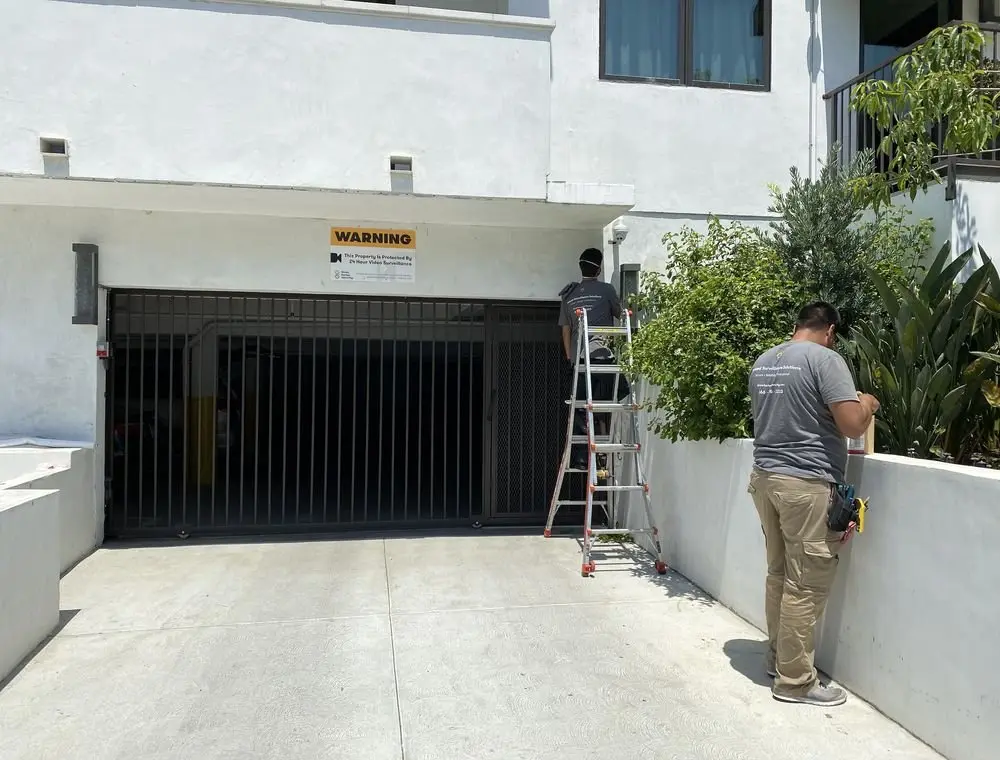
Fieldwork inLos AngelesExterior camera and gate coverage coordinated by two field technicians
Authentic Three Factor Security field work
Practical guidance informed by real project conditions.
Our planning resources reflect the questions, constraints, and decisions that appear during site reviews, installation, commissioning, handoff, maintenance, and system expansion.