Site inventory
Property, system, platform, recorder, panel, door, gate, network, power, monitoring, and service information organized by location.

Multi-location security operations
A multi-site program should make administration, incident review, service, permissions, and expansion easier across locations. It does not require every site to use one app or identical equipment; it requires a clear operating standard and a documented exception process.
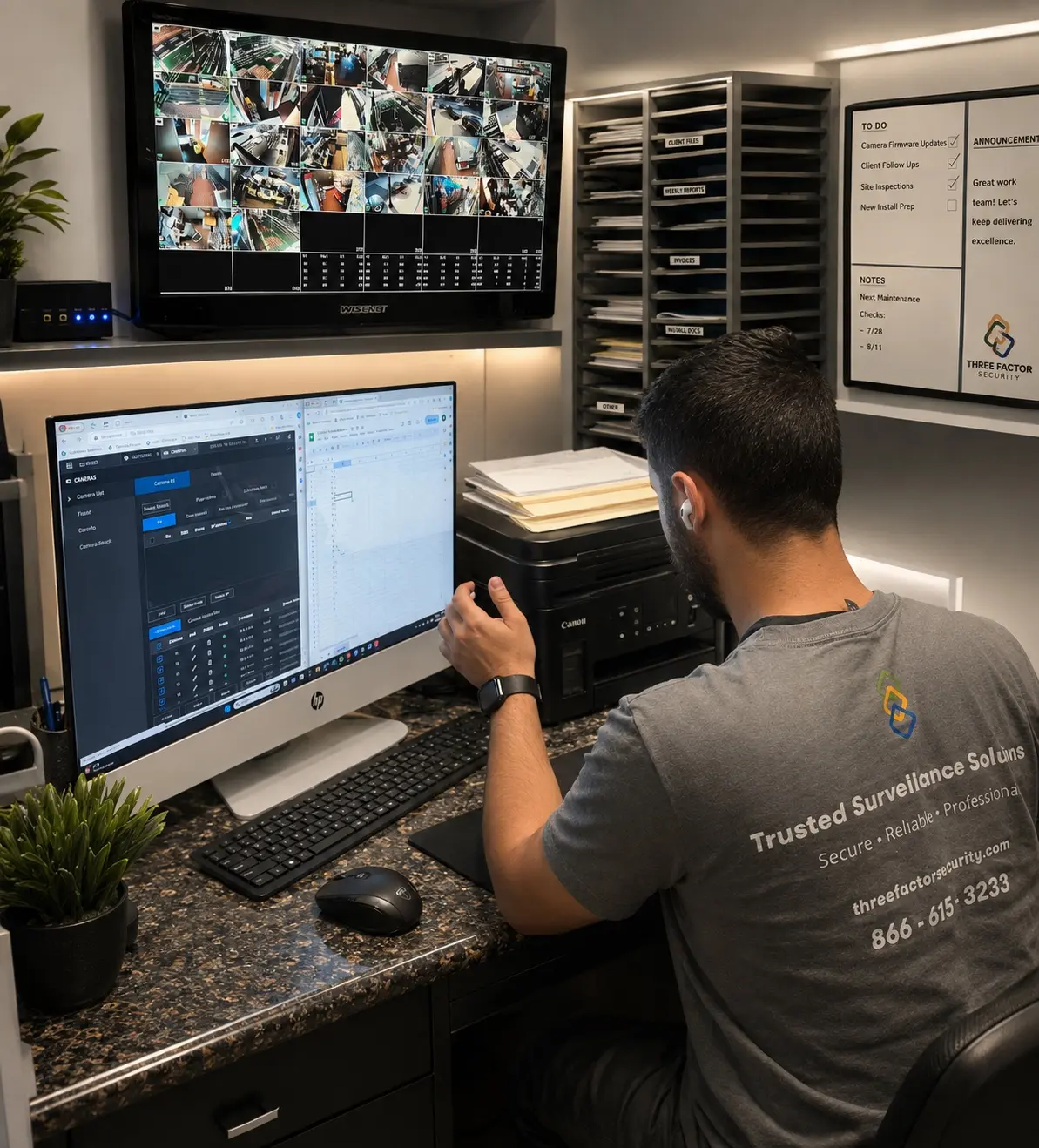 Fieldwork inCentury City
Common standard. Documented exceptions.
The program defines what every location should document, verify, and support. Site-specific conditions—property type, risk, legacy platforms, connectivity, staffing, privacy, and local requirements—remain visible instead of being forced into a template.
Property, system, platform, recorder, panel, door, gate, network, power, monitoring, and service information organized by location.
Common naming rules for sites, buildings, cameras, zones, doors, views, alerts, contacts, and records.
Named administrators, role-based permissions, MFA where supported, approvals, periodic reviews, and documented offboarding.
Defined ownership for offline devices, recording, communication, power, expiring licenses, maintenance, and escalation.
Location-aware contacts, verification, export, escalation, reporting, and evidence handling that remain practical under pressure.
A repeatable process for adding sites, replacing equipment, updating standards, changing users, and preserving system history.
One administrative view—when the selected platforms support it
Where practical, supported systems can consolidate location access, views, alerts, users, health, and evidence. Where legacy or specialized platforms remain separate, the operating standard can still unify naming, permissions, contacts, records, and service escalation.
Program rollout
Build the site, system, account, subscription, contact, and service inventory
Identify urgent failures, unknown ownership, unsupported platforms, and evidence risks
Define portfolio standards for naming, access, health, incidents, documentation, and service
Select pilot sites and test the operational standard against real conditions
Roll out by risk, lifecycle, compatibility, operating schedule, and budget
Review performance, exceptions, service history, and standards on a defined cadence
Resiliency planning
Backup power, alternate communication, local recording, health alerts, and documented recovery steps are selected around the property and service agreement—not assumed.
UPS capacity, safe shutdown, and expected runtime
Internet, cellular, and supported alternate paths
Local, edge, or cloud behavior during an outage
Health notifications, ownership, and escalation
Verification after service is restored
What local support actually means
Local support is not a promise that every issue is immediate. It is an accountable intake and service process built around system history, qualified review, clear communication, and the right next step.
A structured request captures the affected property, systems, symptoms, timing, photos, and authorized contact.
Available project records, equipment, administrator ownership, prior service, and known dependencies guide the first review.
The response may be remote guidance, account coordination, parts planning, a field visit, or a larger assessment.
Findings, completed work, open dependencies, recommendations, and future priorities can be organized for the customer.
Maintenance, repair, expansion, modernization, training, and ownership changes remain connected to the installed system.
Business hours, coverage, labor, equipment, third-party services, and response expectations remain defined by the applicable agreement.
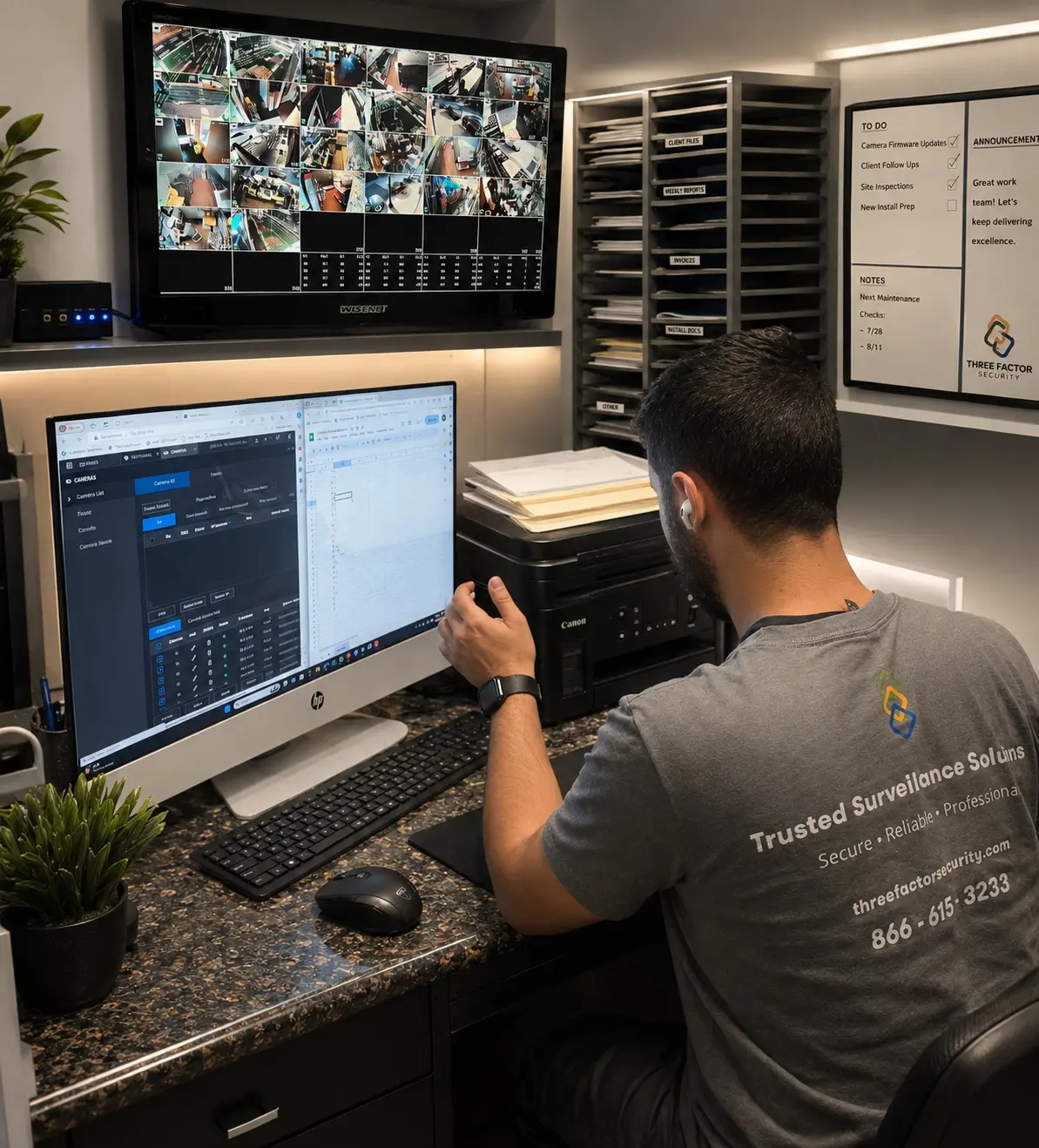 Fieldwork inBaldwin Park
Authentic Three Factor Security field work
Camera views, event settings, notifications, users, schedules, and response expectations must be coordinated before a monitored workflow can support the property effectively.
View more project experienceRelated evidence & planning
Begin with a professional assessment