Use this worksheet to separate portfolio-wide standards from site-specific exceptions. A consistent operating model makes systems easier to administer, support, audit, and expand without forcing every property into identical hardware.
Site name, address, property type, and local owner
Platforms, versions, devices, licenses, and warranties
Administrators, users, roles, and credential owners
Known outages, gaps, unsupported equipment, and open service items
Network, power, storage, monitoring, and integration dependencies
Notes
02
Common operating standards
Define what should be consistent everywhere.
Site, camera, door, zone, device, and alert naming
Role-based permissions and least-necessary access
Credential issue, review, offboarding, and emergency access
Recording, retention, time, export, and audit expectations
Monitoring events, contact order, escalation, and documentation
Notes
03
Site-specific exceptions
Preserve the requirements that cannot be standardized.
Local operating hours and risk zones
Privacy, regulatory, insurance, or contract requirements
Existing infrastructure and platform constraints
Special integrations, doors, gates, elevators, or monitored events
Local response contacts and after-hours access procedures
Notes
04
Lifecycle & accountability
Keep the standard current after deployment.
Inspection and preventive-maintenance cadence
Health-alert ownership and service escalation
Firmware, software, user, and documentation review
Upgrade, replacement, and cybersecurity priorities
Change approval, closeout records, training, and annual review
Notes
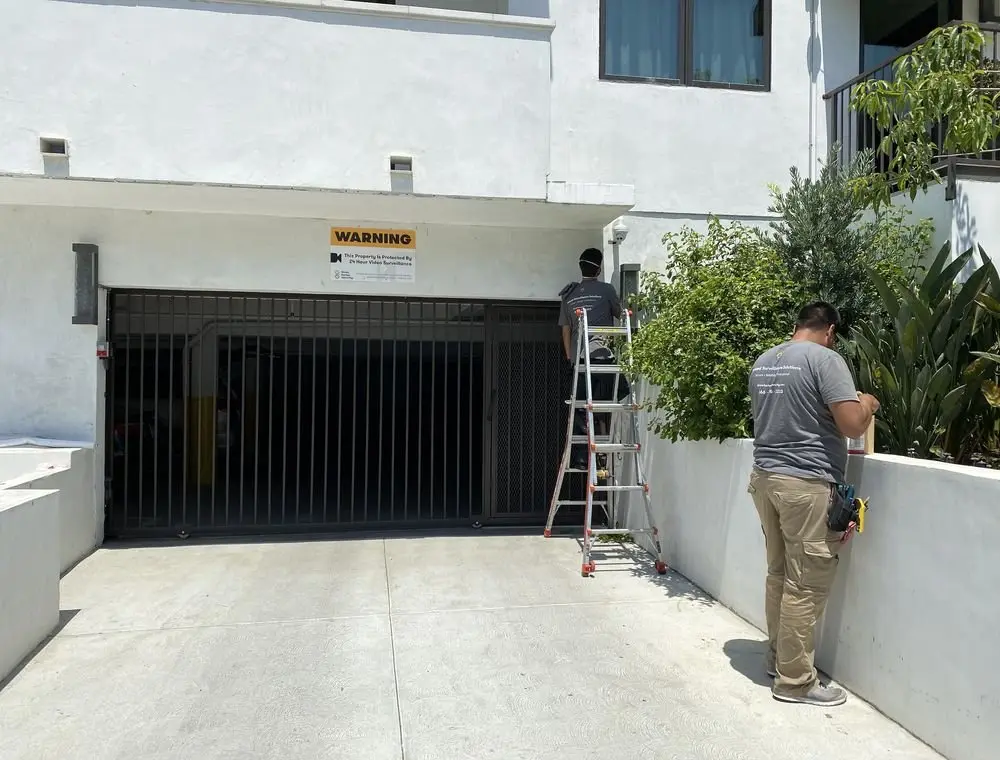
Fieldwork inLos AngelesExterior camera and gate coverage coordinated by two field technicians
Authentic Three Factor Security field work
Practical guidance informed by real project conditions.
Our planning resources reflect the questions, constraints, and decisions that appear during site reviews, installation, commissioning, handoff, maintenance, and system expansion.