
Portfolio-wide visibility
Multi-site security management with clearer standards and control.
Multi-site security works best when local property needs are preserved inside a consistent operating standard for users, permissions, events, support, and future expansion.
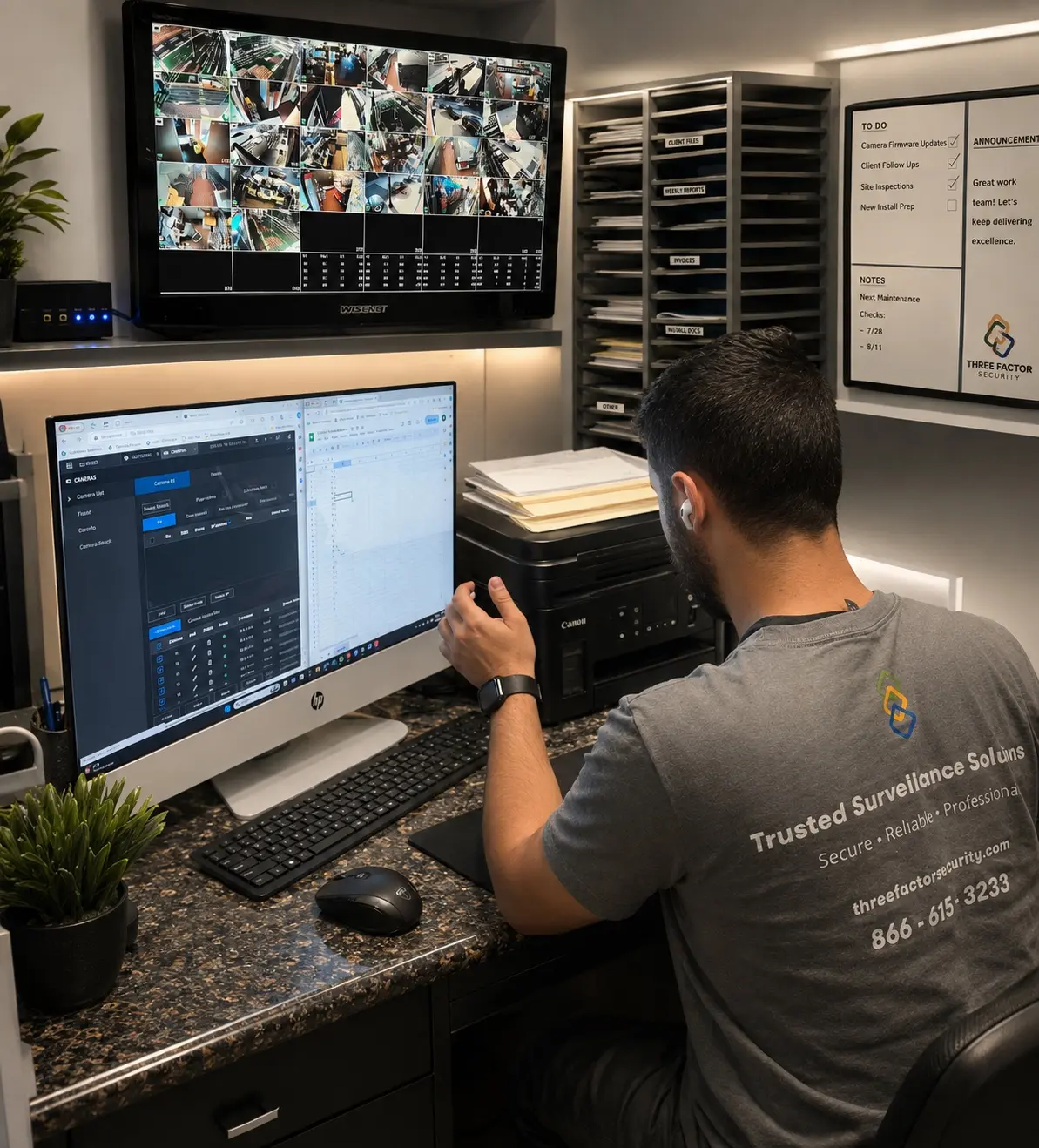 Fieldwork inCentury City
Complete planning context
More than a single device or feature.
Three Factor Security helps organizations evaluate what should be standardized across sites and what must remain property-specific. Camera naming, user roles, access permissions, recording, storage, monitoring, alerts, escalation, network requirements, documentation, system health, service history, and lifecycle priorities can be coordinated into a more manageable portfolio strategy.
What should be evaluated
Decisions that shape a dependable scope.
The final design depends on verified property conditions, selected systems, supported integrations, operating workflows, and the signed project scope.
Role-based users, permissions, credential, and offboarding workflows
Remote viewing, event review, monitoring, and escalation standards
Recording, retention, network, power, and health expectations
Site documentation, maintenance, upgrades, and expansion planning
Planning process
A structured path from need to verified operation.
Inventory the portfolio
Document sites, platforms, devices, users, integrations, support needs, known gaps, and current operating practices.
Define common standards
Establish naming, permissions, recording, monitoring, event, documentation, and lifecycle requirements that can apply across the organization.
Prioritize site work
Separate immediate corrections, compatible integrations, upgrades, and longer-term migrations into practical phases.
Support ongoing operation
Coordinate authorized access, system health, service documentation, maintenance, and future expansion under the selected scope.
Coordinated capabilities
Multi-site camera and access managementUser and permission standardsCentralized event and monitoring workflowsSite naming and documentationSystem health and maintenance coordinationPhased upgrade and lifecycle planning
Portfolio operating standard
Give every property one clear language for users, events, health, and support.
Multi-site technology becomes easier to manage when common operating rules sit above the differences between individual properties and platforms. The objective is consistent decisions and records—not forcing every location into identical equipment.
Site & device naming
Use consistent property, building, camera, door, alarm-zone, recorder, and network names so users, monitoring personnel, and technicians identify the same location quickly.
Activity & exception reporting
Define the platform-supported open-and-close history, alarm events, access exceptions, camera health, and operational reports managers should review—and how often.
Contacts & escalation
Maintain a current contact order by property, with after-hours authority, service authorization, monitoring instructions, and site-specific access or response information.
Roles & offboarding
Standardize administrator, manager, employee, resident, guard, vendor, and service roles while limiting each person to the locations and actions their responsibility requires.
Health & service ownership
Assign responsibility for offline devices, storage alerts, communication failures, batteries, subscriptions, preventive maintenance, corrections, and service follow-through.
Incident & evidence record
Use a consistent method for event review, timestamps, notes, exports, secure sharing, corrective actions, and lessons that should be applied to other locations.
Available reporting, central administration, health awareness, audit history, and cross-site control depend on the selected platforms, licensing, connectivity, permissions, and approved project scope.
Common planning questions
Clear expectations before design begins.
Guidance is prepared and reviewed by Three Factor Security’s named Security Solutions Manager and Security Solutions Engineers. Product compatibility, performance, retention, code, privacy, monitoring, access, and response requirements remain project-specific.
Do all sites need identical equipment?
Not necessarily. A multi-site standard can define common operational, security, documentation, and lifecycle requirements while allowing site-specific equipment and design where conditions differ.
Can existing systems be included?
Existing systems can be inventoried and evaluated for condition, compatibility, security, licensing, support, and integration. Whether equipment is retained, integrated, isolated, upgraded, or replaced depends on the assessment.
How are user permissions handled across sites?
The appropriate structure depends on the selected platforms and organization. Common planning topics include roles, least-necessary access, credential ownership, administrator responsibility, offboarding, audit history, and site-specific exceptions.
Can managers review activity and system health across locations?
Supported platforms may centralize alarm events, access activity, open-and-close history, camera or recorder health, notifications, and reports. The available views, report types, retention, permissions, and cross-site administration depend on the installed systems and licensing.
Begin with a professional assessment