Property owner or administrator
Approves the operating plan, authorized users, monitored areas, service hours, contact order, access instructions, escalation rules, privacy requirements, and changes over time.

Technology, people, and accountability
Three Factor Security coordinates detection, verification, communications, recording, and system support around a written property plan. Monitoring, private-security, site-team, and emergency-service roles remain clearly separated so customers understand who receives an event, who may act, and what is documented.
Who does what?
The final responsibilities are controlled by the signed installation, monitoring, private-security, and property agreements—not by general website descriptions.
Approves the operating plan, authorized users, monitored areas, service hours, contact order, access instructions, escalation rules, privacy requirements, and changes over time.
Assesses and installs the supported technology, coordinates cameras, sensors, audio, connectivity and recording, commissions the system, documents the handoff, and supports the agreed scope.
Receive only enrolled events and supported information, follow the signed verification and action plan, notify approved contacts, and coordinate dispatch when the agreement authorizes it.
Provides field verification, patrol, access, or on-site action only when separately authorized, available, properly licensed, and included in the property-specific operating plan.
Police, fire, and medical responders retain authority over emergency response. Technology and verified information can support—not replace—their procedures and decisions.
 Fieldwork inCentury City
Field-proven coordination
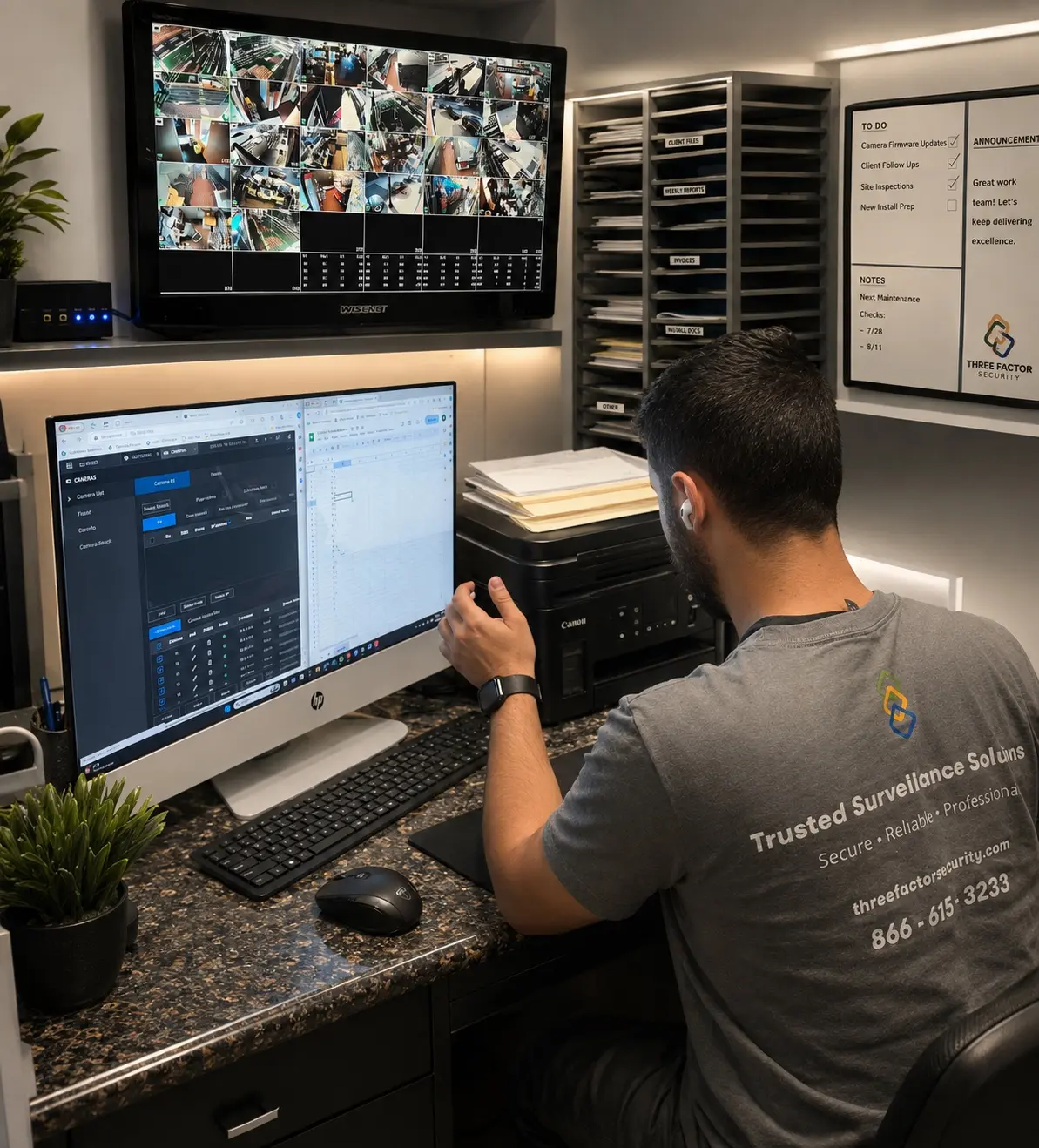
Our mobile-surveillance deployment with Valcor Group demonstrates a practical model: Three Factor Security coordinates the surveillance technology and remote workflow while the licensed private-security organization retains its separate field responsibilities. Contacts, escalation, access, and documentation are aligned before activation.
Read the Valcor coordination case studyEvidence-led service
Available records depend on the platform and service agreement. The objective is a consistent operational record—not an unsupported response-time promise.
Important operating boundary
Three Factor Security describes only the installation, monitoring, technology-support, and coordination responsibilities included in the applicable written scope. A monitoring center, patrol provider, private-security company, or emergency responder is not represented as owned or operated by Three Factor Security unless a signed agreement expressly states otherwise.
Monitoring responsibilities
Professional monitoring is provided through independent monitoring providers. Three Factor Security installs and configures the supported technology and coordinates the agreed service scope. Enrolled events, service hours, verification, talk-down, notifications and dispatch coordination depend on the selected platform and written monitoring agreement. Self-monitored options rely on the customer receiving and acting on alerts.
Understand monitoring and response responsibilitiesBegin with a professional assessment