
Inspection, testing & lifecycle support
Preventive maintenance that keeps security systems ready.
Preventive maintenance checks whether a security system continues to perform its intended functions. Three Factor Security reviews equipment condition, camera views, recording, communications, user access, and supported system-health information, with inspections, testing, updates, and recommendations defined by the service scope.
Designed around the property
Complete scope. Clear handoff. Long-term support.
Security equipment is only valuable when it is operating, recording, communicating, and accessible when needed. Our preventive maintenance and system-health service reviews field devices, recording, storage, network connectivity, backup power, user access, alerts, and system condition as one operating environment. The resulting findings help property teams address developing issues before they become outages or evidence gaps.
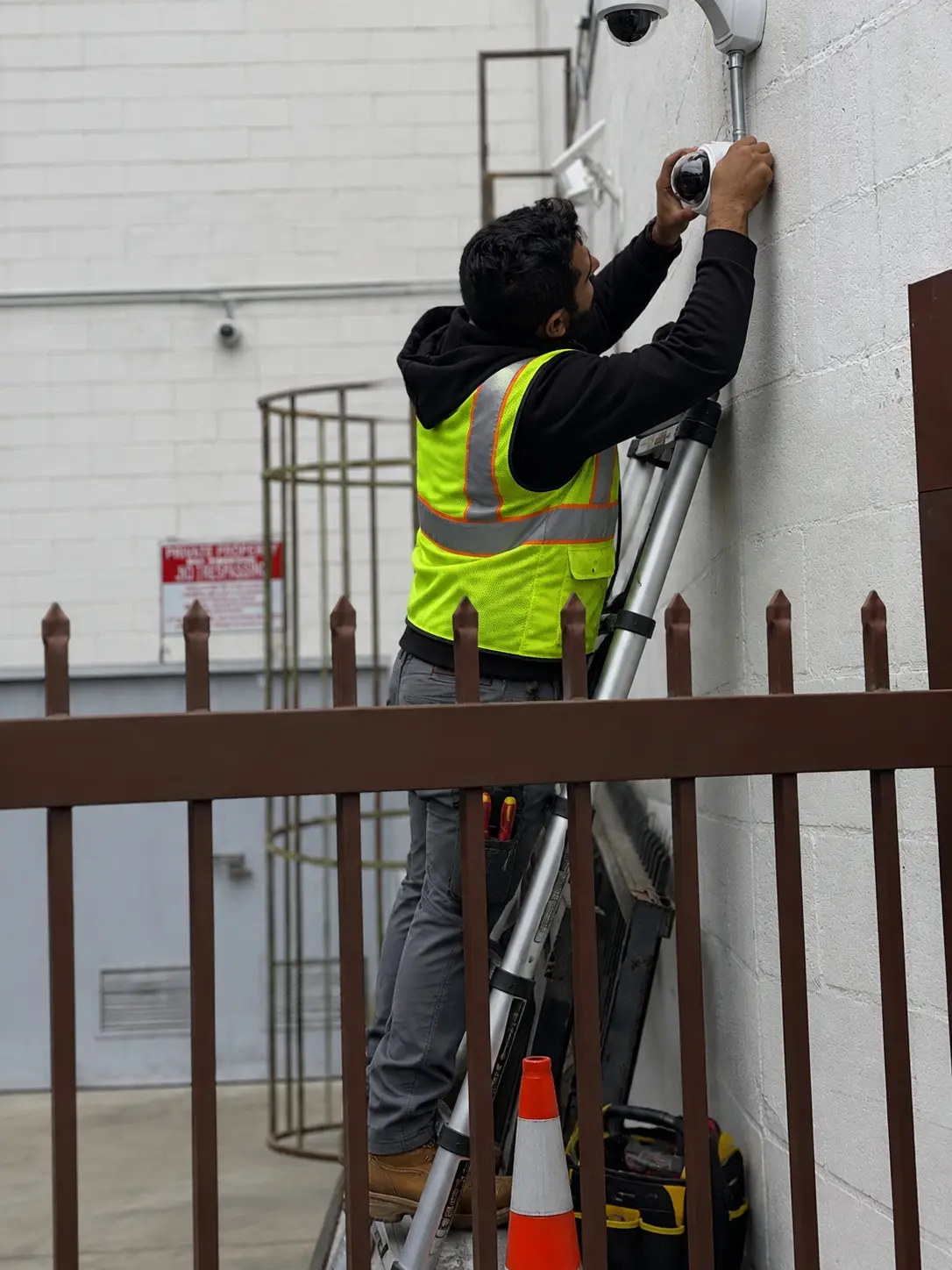 Fieldwork inWestminster
System health & verification
Maintenance includes the full path from field device to recorded evidence.
Our technicians review supported field devices, recording, storage, power, connectivity, permissions, and remote access so developing issues can be identified and prioritized before they become larger failures.
Field-device inspectionRecording and storage verificationDocumented maintenance findings
Capabilities
Everything the system needs to work as one.
Alarm, intercom, access-control, gate, and field-device testing
Recording, retention, storage, time, and playback verification
Network, remote-access, power, battery, UPS, and connectivity checks
Firmware, software, user-permission, and notification review where appropriate
Documented findings, recommended corrections, lifecycle planning, and priority support options
What to expect
A structured path from assessment to handoff.
System inventory
Confirm the installed equipment, critical coverage areas, users, recording requirements, monitoring connections, and known concerns.
Field & platform inspection
Inspect supported devices, mounting, pathways, power, communications, recording, storage, permissions, and remote access.
Functional testing
Test representative events, playback, notifications, entry workflows, backup operation, and other property-specific functions.
Findings & service plan
Document current condition, complete approved corrections, prioritize developing risks, and establish the appropriate maintenance cadence.
Related specialties
Scheduled inspectionsCamera cleaning & focusRecording health checksAlarm device testingBattery & backup-power reviewFirmware & permission reviewMaintenance documentationLifecycle & upgrade planning
System health & evidence readiness
Verify the complete path from field device to usable evidence.
A camera that looks installed is not enough. A useful review checks whether supported devices are online, recordings are complete, timestamps are accurate, retention matches the operating target, authorized users can retrieve footage, and developing failures reach the right people.
Device availability
Identify offline, unstable, obstructed, damaged, poorly aimed, or degraded cameras and other supported field devices.
Recorder & storage health
Review recorder operation, drive condition, storage utilization, recording continuity, playback, and supported fault alerts.
Retention verification
Compare actual retrievable footage against the documented retention target instead of relying only on an estimated capacity.
Time accuracy
Confirm timestamps and time synchronization so exported video can be aligned with access, alarm, incident, and operational records.
Power & network path
Review relevant PoE, network, internet, cellular, UPS, battery, and connectivity conditions that can interrupt recording or remote access.
Alert delivery
Confirm supported health notifications are enabled, reach current authorized recipients, and have a documented service-escalation path.
Evidence export test
Perform a representative search, playback, and export to confirm authorized users can retrieve a usable clip before an incident demands it.
Maintenance record
Document findings, completed corrections, deferred risks, responsible parties, and the next review date for operational continuity.
Continuous health alerts, remote diagnostics, automated retention reporting, and export tools depend on the supported platform and the services included in the written maintenance agreement.
Maintenance plan comparison
Choose the level of review your property needs.
Final frequency, inclusions, exclusions, scheduling, corrections, pricing, and priority terms are established in the written service agreement.
Focused baseline
System Health Review
Properties that need a documented snapshot before repairs, budgeting, or a longer-term service plan.
One-time or as requested- Installed-system inventory and condition review
- Representative device, recording, storage, retention, and playback checks
- Timestamp, notification-destination, and evidence-export verification
- Power, connectivity, remote-access, and user review where appropriate
- Written findings with prioritized recommendations
Scheduled maintenance
Preventive Care
Stable single-site systems that benefit from recurring inspection, cleaning, verification, and lifecycle planning.
Cadence established by written agreement- Everything in the System Health Review
- Scheduled camera cleaning, focus, alignment, and image checks
- Recorder, drive, retention, time, notification, network, and battery review
- Supported firmware, user-permission, and health-alert review
- Maintenance history and developing-risk recommendations
Higher-touch support
Priority Care
Operationally important, multi-system, or multi-site environments that need more frequent review and coordinated planning.
Property-specific service schedule- Everything in Preventive Care
- More frequent system-health and permission reviews
- Remote diagnostics and health-alert review where the platform supports them
- Coordinated training, documentation, and authorized-user updates
- Priority scheduling and lifecycle planning as defined in the agreement
Proof & deeper planning
Continue from this service into real work and focused solutions.
Project briefs document visible field delivery. Specialty solution pages explain how this service coordinates with other systems and operating requirements.
Project brief
Video security installation across an active aviation cargo environment.
View projectProject brief
Camera installation coordinated around an operating retail property.
View projectProject brief
Security infrastructure installed across an active industrial facility.
View projectSpecialty solution
Multi-site security management with clearer standards and control.
Explore solutionSpecialty solution
Video storage and retention planning built around the real camera mix.
Explore solutionRelated evidence & planning
Service-specific planning tools
Prepare the next decision with a practical resource.
Common questions
Clear answers before the project begins.
These answers explain practical planning considerations for this service. Final recommendations are based on a professional assessment, the existing infrastructure, the property’s operating needs, and the systems selected.
Does a live camera image prove that recording is healthy?
No. A live view does not establish that storage is available, recording is continuous, the correct retention is being achieved, or exports will work. Maintenance should check playback, usable recorded history, time accuracy, recorder and storage status, and a practical export workflow.
What should a security-system maintenance visit check?
The agreed scope can include device condition, image quality, recording, power, batteries, networking, entry and intercom functions, permissions, and supported notifications. Record findings and recommended corrections so the customer can distinguish an observed issue from optional modernization.
How often should maintenance be scheduled?
The interval depends on equipment, exposure, site use, system importance, manufacturer guidance, and the service agreement. Dust, salt air, landscaping changes, repeated faults, or altered operating conditions may require additional attention. Use actual condition and risk when setting the review schedule.
Who should receive system-health alerts?
Assign alerts to named, authorized people or a contracted service with a clear responsibility to review them. Confirm which events the platform reports and test notification delivery. A health feature is useful only when the relevant faults are visible and someone is responsible for acting on them.
Southern California service areas
Preventive Maintenance & System Health in Los Angeles →Preventive Maintenance & System Health in Beverly Hills →Preventive Maintenance & System Health in Santa Monica →Preventive Maintenance & System Health in Irvine →Preventive Maintenance & System Health in Newport Beach →Preventive Maintenance & System Health in Ventura →View every service area →
Complete security offering
Coordinate this service with every layer of protection.
Explore the other systems and services Three Factor Security can design, install, monitor, and support around the same property.
Security Camera Systems
Professionally designed camera systems for dependable coverage, useful evidence, intelligent alerts, and secure viewing from anywhere.
Explore serviceLive Monitoring & Remote Site Surveillance
Construction site monitoring and trained operator oversight for staffed, unattended, distributed, temporary, and high-risk properties that need dependable remote visibility.
Explore serviceVirtual Security Guard & Incident Response
Commercial and residential virtual security guard service with live remote patrols, event verification, authorized audio talk-down, and coordinated response while incidents are developing.
Explore serviceAlarm Systems
Layered intrusion detection with clear controls, verification options, dependable communications, and monitoring-ready operation.
Explore serviceIntercom Systems
Audio and video intercom systems that help teams identify visitors, communicate clearly, and release doors or gates with confidence.
Explore serviceAccess Control Systems
Secure, manageable access control for doors, gates, garages, elevators, and shared spaces—installed around daily operations.
Explore serviceEarly Detection Systems
AI analytics, perimeter technology, thermal sensing, and intelligent alerts designed to identify developing threats before they become damaging incidents.
Explore serviceGates, Fencing & Perimeter Security
Professionally designed pedestrian gates, vehicle gates, perimeter gates, and fencing—with gate operators, LPR-based vehicle entry, access control, and intercom release integrated around the property.
Explore serviceSecurity Audio & Emergency Communication Systems
Purpose-built speakers, paging, talk-down, duress, and security communication systems that help teams warn, direct, deter, and respond in real time.
Explore serviceSecurity System Upgrades & Modernization
Carefully planned upgrades for aging, unreliable, unsupported, or poorly documented camera, alarm, access-control, intercom, recording, and monitoring systems.
Explore serviceConsulting & System Design
Property-specific consulting, system audits, design documentation, budgeting, and phased security roadmaps built around real operating needs.
Explore serviceProject support
Clear terms. Dependable follow-through.
Coverage, service terms, and handoff requirements are documented for each project. Preventive maintenance, diagnostics, upgrades, and expansion options remain available as the property evolves.
Review our service commitment →Why security systems fail
Most failures develop quietly before they become urgent.
A system can look normal while recording, communication, permissions, or field performance has already degraded. Routine review finds those issues before the next incident exposes them.
Power & communication
Failed power supplies, depleted backup batteries, internet changes, cellular-path issues, or disabled network equipment can interrupt otherwise healthy devices.
Recording & storage
Drive health, overwritten footage, incorrect recording schedules, retention changes, or recorder limits can create gaps that are discovered only after an incident.
Views & detection
Moved cameras, landscaping, lighting changes, dirty lenses, blocked sightlines, or poorly tuned analytics can reduce the value of coverage over time.
Users & permissions
Departed staff, shared accounts, lost administrator access, outdated contacts, or unreviewed notification rules can leave the wrong people in control.
Doors, gates & field devices
Misalignment, worn hardware, damaged cabling, environmental exposure, and third-party changes can affect readers, contacts, locks, intercoms, and perimeter devices.
Documentation & ownership
Unknown equipment, missing credentials, inconsistent names, undocumented changes, and unclear support responsibility make every future service call harder.
Resiliency planning
Plan what the system should do when normal conditions are interrupted.
Backup power, alternate communication, local recording, health alerts, and documented recovery steps are selected around the property and service agreement—not assumed.
UPS capacity, safe shutdown, and expected runtime
Internet, cellular, and supported alternate paths
Local, edge, or cloud behavior during an outage
Health notifications, ownership, and escalation
Verification after service is restored
Begin with a professional assessment