Use this checklist to prepare for a professional system-health review and to document concerns that may be developing between visits. It does not replace manufacturer instructions, qualified service, or a property-specific maintenance agreement.
Lens cleanliness, focus, image quality, and obstruction
Camera or sensor alignment and mounting condition
Alarm, intercom, reader, lock, gate, and request-to-exit operation
Visible cable, conduit, enclosure, seal, and tamper condition
Representative day, night, and event performance
Notes
02
Recording & evidence
Confirm that useful information is actually available.
Current time and date across systems
Live view, playback, event search, and export
Expected retention and usable storage capacity
Recorder, server, drive, and system-health alerts
Audio, analytics, bookmarks, and evidence-handling workflow where used
Notes
03
Network, power & remote access
Review the infrastructure that keeps systems reachable.
Switch, PoE, link, network, and connectivity status
UPS, battery, power supply, and backup operation
Remote access, administrator accounts, and multi-factor settings
Firmware, software, certificate, and supported-version status
Notification destinations and failed-alert history
Notes
04
People & documentation
Keep ownership and records current.
Authorized users, roles, credentials, and offboarding
Monitoring contacts, escalation order, and dispatch instructions
Device naming, drawings, passwords, and configuration records
Previous findings, unresolved items, and recurring failures
Training needs, lifecycle risks, and planned expansion
Notes
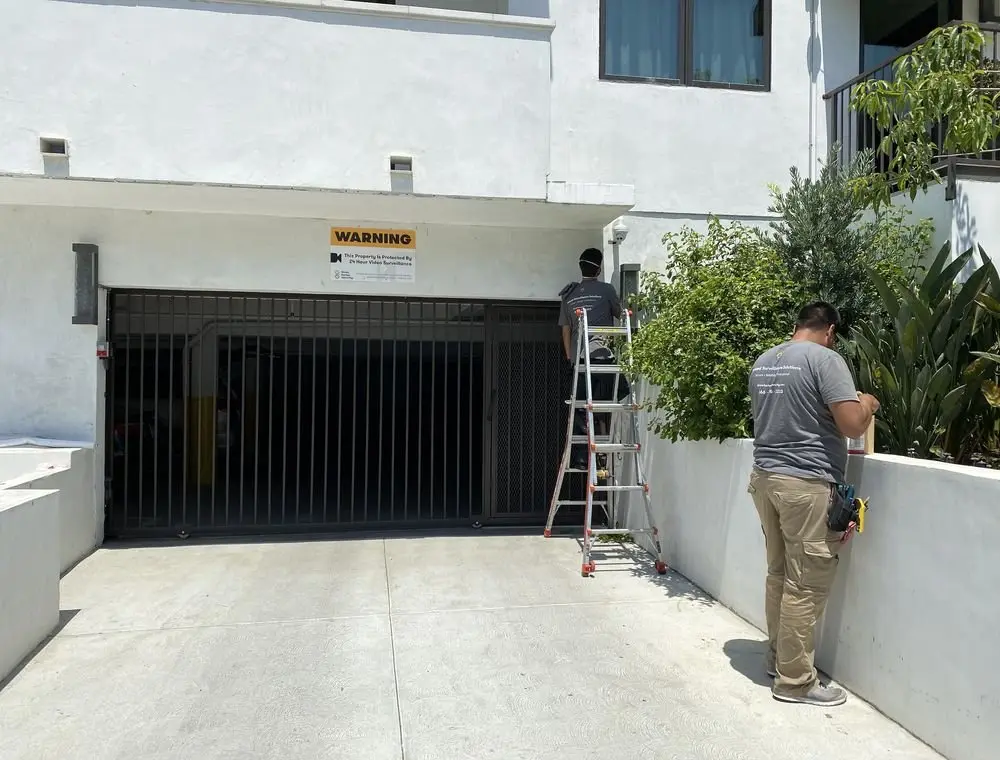
Fieldwork inLos AngelesExterior camera and gate coverage coordinated by two field technicians
Authentic Three Factor Security field work
Practical guidance informed by real project conditions.
Our planning resources reflect the questions, constraints, and decisions that appear during site reviews, installation, commissioning, handoff, maintenance, and system expansion.