
Vehicle identification & controlled entry
License-plate recognition planned as a complete vehicle workflow.
Reliable plate capture depends on a dedicated view, the real lane geometry, lighting, vehicle movement, recording, permissions, and the operational decision that follows a recognized plate.
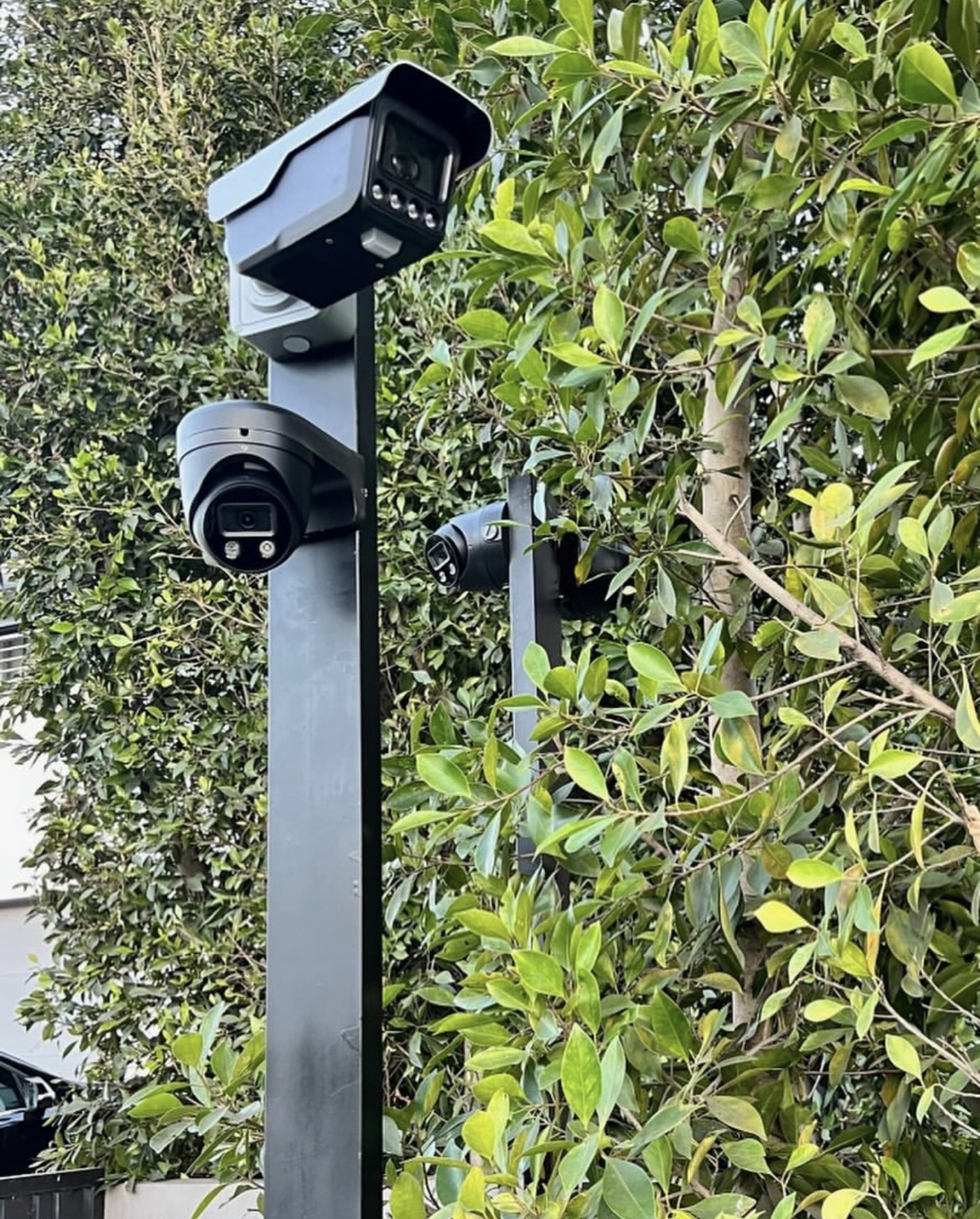 Fieldwork inBeverly Hills
Complete planning context
More than a single device or feature.
Three Factor Security can coordinate a dedicated LPR camera with supplemental overview cameras so plate imagery and broader vehicle context are available together. Design considers lane direction, target distance, mounting height, field of view, speed, lighting, network, power, recording, retention, authorized users, event search, and—when appropriate—supported access-control or gate workflows.
What should be evaluated
Decisions that shape a dependable scope.
The final design depends on verified property conditions, selected systems, supported integrations, operating workflows, and the signed project scope.
Lane direction, distance, speed, angle, lighting, and mounting
Custom posts, protective infrastructure, network, power, and recording
Search, permissions, retention, approved-list, and alert workflows
Safe gate or vehicle-access integration where the property supports it
Planning process
A structured path from need to verified operation.
Study vehicle movement
Review lanes, entry and exit direction, stopping points, speed, target distance, lighting, and the decisions the system must support.
Design the capture point
Coordinate the dedicated plate view, contextual cameras, mounting, network, power, recording, retention, and protected pathways.
Configure the workflow
Set supported search, permissions, notifications, lists, and access-control actions around approved operational requirements.
Test representative conditions
Verify plate and context views across representative directions, times, lighting, vehicle positions, recordings, and authorized workflows.
Coordinated capabilities
Dedicated LPR camera placementSupplemental overview camerasCustom posts and exterior infrastructurePlate search and event reviewPermission and retention planningSupported gate and access-control integration
Common planning questions
Clear expectations before design begins.
Guidance is prepared and reviewed by Three Factor Security’s named Security Solutions Manager and Security Solutions Engineers. Product compatibility, performance, retention, code, privacy, monitoring, access, and response requirements remain project-specific.
Why use both an LPR camera and supplemental cameras?
A dedicated LPR view is optimized for plate capture, while supplemental cameras can preserve wider vehicle, direction, lane, and surrounding context. The exact camera combination depends on the property and required evidence.
Can a recognized plate open a vehicle gate?
Supported LPR and access-control systems can be considered for authorized vehicle-entry workflows where the property, gate hardware, safety devices, egress requirements, permissions, and operating procedures support that use.
Is plate recognition guaranteed in every condition?
No camera should be represented as perfect in every condition. Performance depends on factors including distance, angle, speed, lighting, weather, plate condition, obstruction, equipment, configuration, and ongoing maintenance.
How should plate data access and retention be handled?
The property should define a legitimate operating purpose, authorized users, retention target, search and sharing rules, incident handling, and a deletion or decommissioning process. Three Factor Security can document supported technical controls; the property remains responsible for its policies and legal guidance.
Begin with a professional assessment