Define what each view must help the team understand.
Priority events and decision to be supported
Identification, recognition, observation, or situational awareness need
Entrances, transactions, lanes, perimeters, assets, and restricted areas
Day, night, backlight, weather, speed, and distance conditions
Incident discovery time and evidence-export expectations
Notes
02
Infrastructure
Document the pathways and systems behind the cameras.
Existing cameras, recorder, network, switches, power, and cabling
Equipment-room space, cooling, UPS, and secure access
Available pathways, ceilings, conduit, wireless, and exterior exposure
Camera compatibility and supported platform versions
Future camera, site, storage, and bandwidth headroom
Notes
03
Recording & users
Define how video will be retained and administered.
Camera mix, resolution, frame rate, codec, and recording mode
Retention target, usable storage, array overhead, and backup needs
Mobile, desktop, video-wall, and multi-site viewing
User roles, privacy areas, audit history, and offboarding
Health alerts, time synchronization, and evidence handling
Notes
04
Handoff & support
Plan for operation after installation.
Naming, labels, drawings, credentials, and configuration records
Representative live, recorded, search, export, and notification tests
Administrator and end-user training
Warranty, service intake, and escalation contacts
Maintenance cadence, health review, upgrades, and expansion
Notes
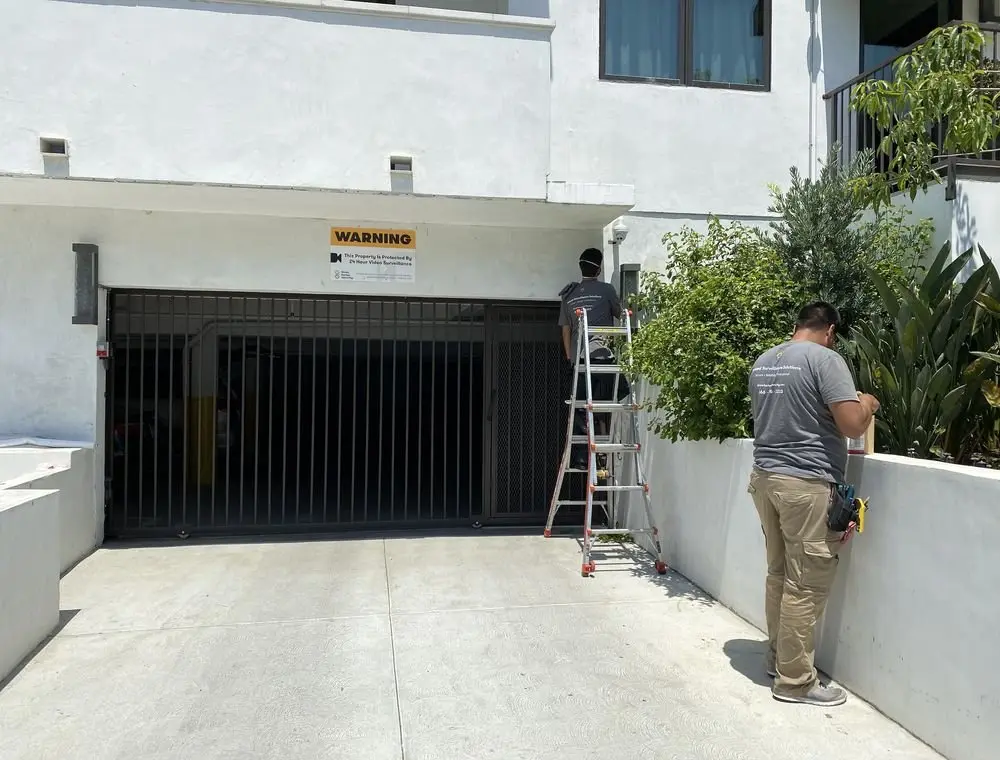
Fieldwork inLos AngelesExterior camera and gate coverage coordinated by two field technicians
Authentic Three Factor Security field work
Practical guidance informed by real project conditions.
Our planning resources reflect the questions, constraints, and decisions that appear during site reviews, installation, commissioning, handoff, maintenance, and system expansion.